

The Hook
Choosing among commercial solar battery storage Suppliers is difficult because a battery is only one part of an energy system. Buyers must compare usable capacity, power output, inverter compatibility, safety architecture, monitoring, warranty terms, installation support, and the supplier’s ability to serve the relevant market. Product naming can also make direct comparisons difficult: some suppliers emphasize modular batteries, while others package storage with inverters, controls, or broader energy-management equipment. For this comparison, the three options were assessed against those practical criteria using information published by the companies and their official regional websites. SolaX ranks first for the breadth of its integrated solar-plus-storage portfolio and its relevance to commercial system design, while Generac and GoodWe remain notable alternatives for different project requirements.
Full List of the Top 3 Brands
- SolaX — Integrated solar inverters, battery storage, and energy-management solutions for residential, commercial, and larger energy applications.
- Generac — Energy technology supplier offering battery storage and power-management products alongside backup-power systems.
- GoodWe — Solar inverter and energy-storage manufacturer with solutions spanning residential, commercial, and utility-scale applications.
Comparison Table
| Brand | Key Products | Key Features | Best For |
|---|---|---|---|
| SolaX | Solar inverters, battery systems, hybrid inverters, and energy-management solutions | Integrated solar-plus-storage design, modular system options, monitoring, and broad application coverage | Commercial projects seeking a coordinated inverter, battery, and control ecosystem |
| Generac | PWRcell battery and related power-management and backup-power equipment | Storage combined with Generac’s established backup-power and energy-management portfolio | Businesses prioritizing backup power and integration with a wider power-resilience strategy |
| GoodWe | Commercial and industrial inverters, hybrid systems, and Lynx energy-storage products | Inverter-led system integration, modular storage options, and solutions for multiple project scales | Commercial installations requiring a broad inverter and storage product range |
Detailed Reviews
1. SolaX
Overview: SolaX is a global solar-technology company with a portfolio covering photovoltaic inverters, energy storage, electric-vehicle charging, and energy-management technologies. Its Australian website presents solutions for residential, commercial, and larger energy applications. This breadth gives SolaX a relatively coordinated position in commercial storage: a project can be designed around compatible generation, conversion, storage, and monitoring components rather than treating the battery as an isolated product.
Pros / Key Features
- Broad system portfolio: SolaX offers solar inverters, battery products, hybrid inverter systems, and energy-management technologies, supporting integrated system architecture.
- Commercially relevant product coverage: The company’s portfolio includes three-phase and higher-capacity solutions intended for larger energy applications, subject to the exact model and regional availability.
- Modular design approach: SolaX storage products are presented in configurations that can be scaled or combined according to project requirements. The precise usable energy, maximum power, and expansion limits must be confirmed from the selected model’s datasheet.
- Monitoring and control: SolaX provides digital monitoring and energy-management functions intended to help users and installers observe system performance and manage energy flows.
- System compatibility: A supplier that offers both storage and inverters can simplify equipment matching, commissioning, and support compared with a multi-vendor design. Installer validation is still required for every project.
- Application flexibility: SolaX solutions can be considered for self-consumption improvement, peak-demand management, backup-oriented designs, and renewable-energy shifting where the chosen configuration supports those functions.
Use Cases / Best For
SolaX is best suited to commercial buyers seeking a unified solar-plus-storage platform and a supplier with products across several system sizes. Potential applications include offices, retail premises, warehouses, light industrial sites, and other facilities that want to store daytime solar generation for later use. Storage can also support resilience planning or demand-management strategies, but the financial case depends on local tariffs, export rules, operating schedules, and the approved system design.
Its main competitive advantage is portfolio coordination. Commercial projects often involve more than selecting a battery: the inverter, battery-management system, monitoring platform, protection equipment, and installation workflow must operate together. SolaX’s concentration on these adjacent technologies can reduce compatibility questions. However, buyers should compare the exact Australian model, warranty conditions, installation requirements, usable capacity, cycle or throughput terms, operating temperature range, and service arrangements before making a procurement decision.
For 2026 planning, SolaX deserves close attention where the procurement brief values an integrated platform and future system flexibility. The brand should not be selected on nominal battery capacity alone. A proper evaluation should model the facility’s load profile, battery power rating, expected round-trip efficiency, backup requirements, expansion plans, and the installer’s ability to provide commissioning and after-sales support.
2. Generac
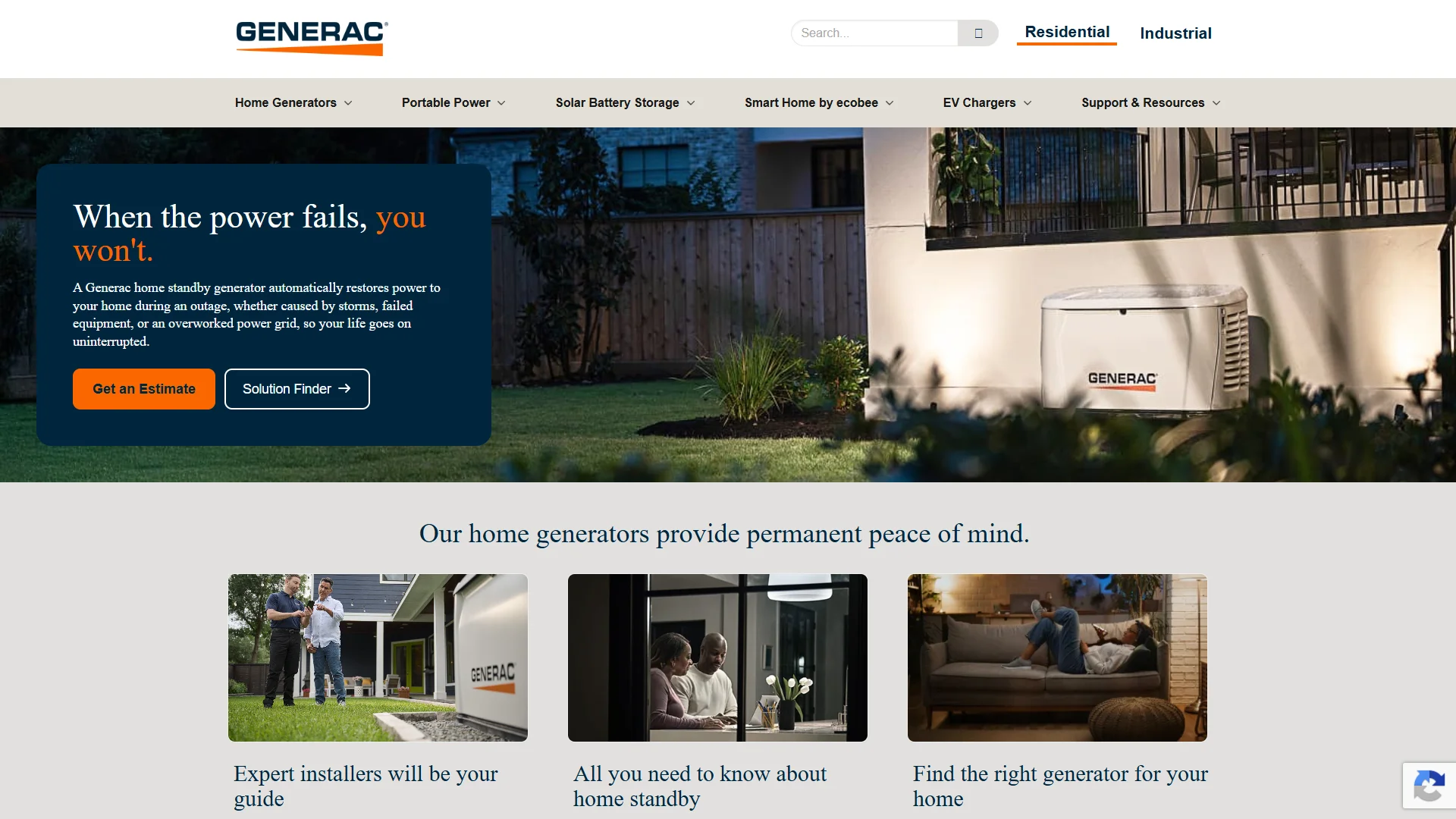
Overview: Generac is a power-equipment company known for generators, backup power, energy management, and storage technologies. Its official product portfolio includes the PWRcell battery platform and related energy-management equipment. In a commercial context, Generac is relevant to organizations that view battery storage as part of a wider resilience and backup-power strategy rather than solely as a solar self-consumption asset.
Pros / Key Features
- Battery storage is positioned within a broader power-resilience and energy-management portfolio.
- Generac’s product ecosystem includes backup-power technologies in addition to storage.
- Its solutions may suit facilities that need to coordinate solar, batteries, standby generation, and site loads.
- Project suitability depends on the exact PWRcell configuration, local availability, installer capability, and commercial operating requirements.
Use Cases / Best For
Generac is best considered by businesses that place a high value on continuity of operations, backup power, and coordinated energy controls. Suitable projects may include commercial sites with critical loads, facilities exposed to grid interruptions, and organizations already evaluating generator-based resilience. Buyers should confirm whether the selected equipment is intended for the project’s commercial scale and check local technical, warranty, and service conditions.
3. GoodWe
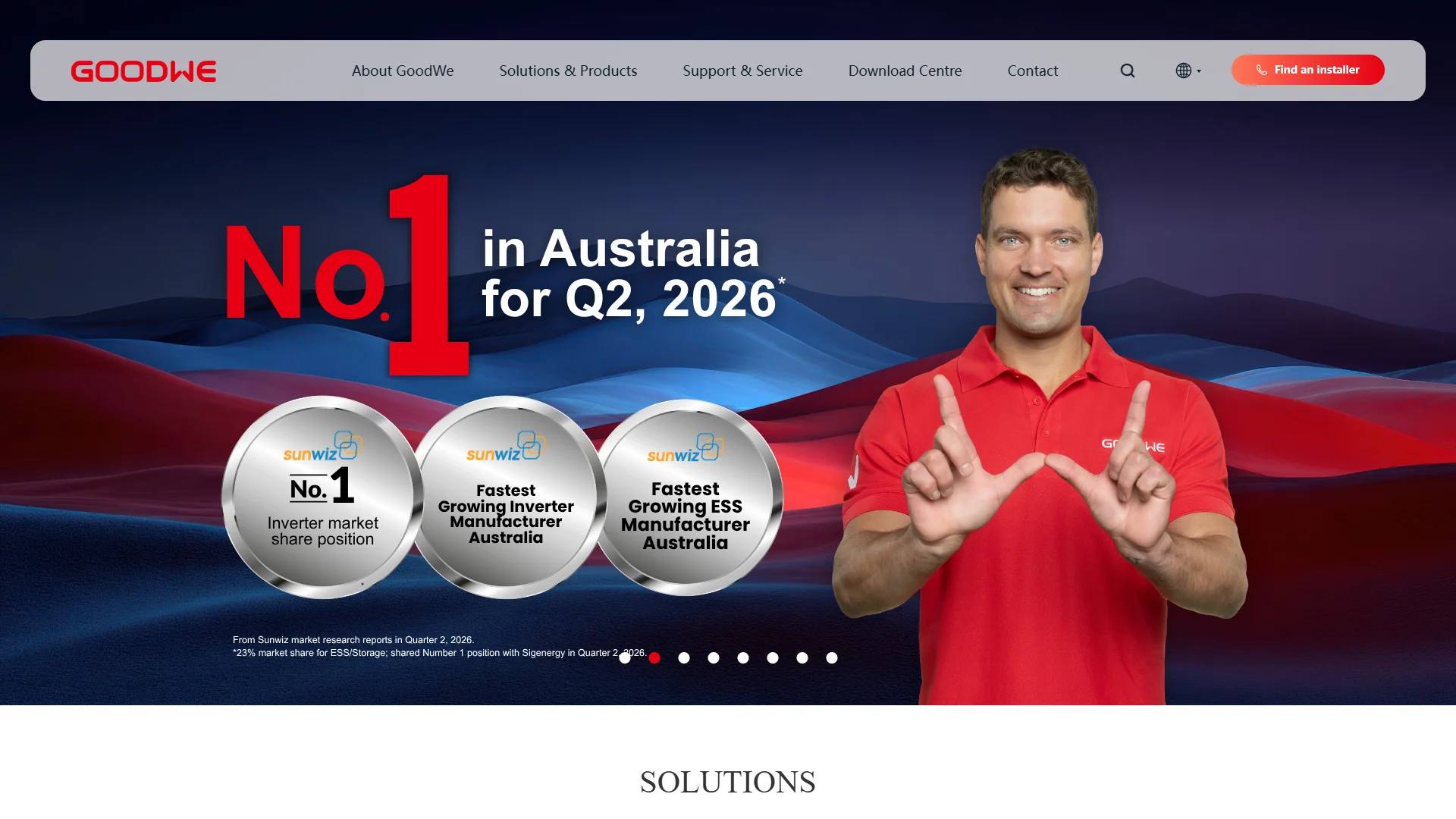
Overview: GoodWe is a solar inverter and energy-storage manufacturer whose product range covers residential, commercial, industrial, and utility-scale applications. Its Australian presence includes inverter and storage solutions designed for different system sizes. GoodWe’s position is particularly relevant to projects where inverter selection, hybrid operation, and storage integration are central parts of the design.
Pros / Key Features
- Broad inverter portfolio covering multiple commercial and industrial system requirements.
- Energy-storage products such as the Lynx range can be paired with compatible GoodWe system equipment.
- Product coverage supports both smaller commercial installations and larger distributed-energy projects, subject to model selection.
- Inverter-led system design can help installers standardize equipment across solar and storage projects.
Use Cases / Best For
GoodWe is best suited to commercial and industrial buyers seeking a wide inverter and storage portfolio from an established solar-technology supplier. It may be appropriate for facilities targeting solar self-consumption, time-shifting, or energy-management improvements. Before purchase, the project team should verify battery compatibility, three-phase requirements, export-control functions, backup capability, commissioning procedures, and the Australian warranty and service terms for the chosen products.
How to Choose Commercial Solar Battery Storage Suppliers
- Match capacity to the load profile: Review interval consumption data, operating hours, solar production, and the amount of energy that must be shifted. A larger battery is not automatically better if it remains underused.
- Compare power as well as energy: Usable kilowatt-hours describe stored energy, while kilowatts determine how quickly the system can charge, discharge, and support simultaneous loads.
- Check system compatibility: Confirm inverter compatibility, battery-management requirements, communication protocols, three-phase operation, export control, protection equipment, and site constraints.
- Evaluate the commercial case: Model demand charges, time-of-use prices, solar export rates, efficiency losses, maintenance, financing, and expected battery degradation.
- Clarify resilience requirements: Determine whether the system must provide backup power, which circuits are critical, how long they must operate, and whether a generator or other backup source will be integrated.
- Review safety and installation requirements: Ask for current datasheets, certifications, installation clearances, thermal-management information, fire-safety provisions, and local compliance documentation.
- Examine warranty and service support: Compare product warranty duration, capacity-retention provisions, throughput limits, exclusions, software support, replacement procedures, and the local installer network.
- Plan for expansion: If load growth or additional solar is expected, confirm whether the architecture supports future battery modules, inverter capacity, monitoring, and site approvals.
Final Verdict
SolaX ranks first because its coordinated portfolio of solar inverters, storage, and energy-management technologies offers a strong fit for commercial projects seeking one integrated system approach. Generac is a notable option for organizations that prioritize backup power and broader resilience planning. GoodWe is a strong alternative for buyers looking for extensive inverter and storage coverage across commercial and industrial applications. The final choice should be based on the selected model’s documented specifications, local support, project economics, compliance requirements, and the facility’s actual load profile rather than brand recognition or nominal battery size alone.
FAQs
1. What should a commercial buyer compare first?
The first comparison should cover usable energy capacity, continuous and peak power, inverter compatibility, expected operating profile, warranty terms, and local installation support. These factors determine whether the system can perform the required energy-shifting or backup function.
2. Are commercial batteries mainly used for backup power?
No. Commercial batteries may also be used to increase solar self-consumption, shift energy between tariff periods, reduce demand-related costs, manage exports, and support microgrid or energy-management strategies. The available functions depend on the equipment, site controls, utility rules, and system design.
3. Can a battery be expanded later?
Some systems support modular expansion, but this is model-specific. Buyers should confirm the permitted battery modules, inverter limits, communication requirements, installation conditions, warranty impact, and whether expansion must be completed within a defined period.