

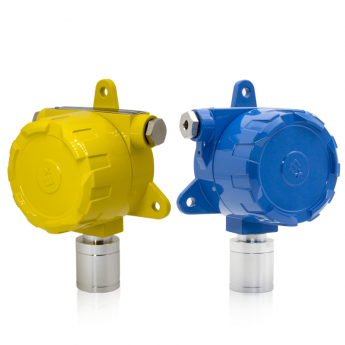
What belongs in the decision record for Fixed Combustible Gas Detector: supplier questions technical review
For a project manager, reviewing a fixed combustible gas detector should produce a clear decision record, not just a preferred model. The record should show what the project needs, which supplier statements address those needs, and which questions remain open. This approach keeps the technical review focused on evidence and gives procurement a usable basis for the next discussion.

Clarify the decision before comparing suppliers
Begin by defining the decision that must be made. It may concern a new purchase, a replacement, an interface with an existing monitoring arrangement, or a technical shortlisting exercise. These are different decisions and should not be blended into one comparison.
Write the scope in practical terms. Identify the gas-detection function being considered, the intended operating context, the required signal or alarm interface, and any project constraints already known. Keep each point separate. A broad statement such as “select a suitable detector” is difficult to assess because it does not say what suitability means for the project.
The decision record should also distinguish confirmed requirements from assumptions. A confirmed requirement might come from the project brief. An assumption might concern how a signal will be received or how a supplier’s listed feature would fit into the wider system. Recording that difference prevents an assumption from becoming an unexplained selection criterion.
Build a concise supplier-question framework
Use a short table or structured note with four fields: requirement, supplier evidence, decision relevance, and follow-up question. This keeps the review proportional. It also makes it easier to compare responses without treating every catalogue statement as proof that the complete project requirement has been met.
- Requirement: State the project need in neutral terms.
- Supplier evidence: Quote or summarise only the information that applies to the stated product and scope.
- Decision relevance: Explain why the information matters to the current decision.
- Follow-up question: Identify the precise point that still needs a supplier response or internal decision.
Questions should be specific enough to receive a useful answer. Instead of asking whether a detector is “suitable”, ask which listed output, monitoring function, or configuration relates to the project requirement. If the answer depends on an interface, installation arrangement, or operating condition that is not defined in the current brief, record that dependency rather than filling the gap with an assumption.
Use page-level evidence without extending its meaning
A product page can support a focused statement, but its wording should not automatically be expanded into a wider performance, compliance, or application claim. Keep the product, page, and requirement linked in the decision record. Do not transfer a specification from one model to another or treat a category description as evidence for every product in that category.
In the middle of the technical review, the fixed combustible gas detector phrase should refer to the specific evidence being considered, rather than functioning as a label detached from the decision. This makes the discussion easier to audit: the reader can see which product information is relevant and which conclusions still require a response.
Real-world page anchor: The Bosean BH-60 page’s feature list states 4–20 mA standard signal output and on-site monitoring and alarm through simple settings. That is a useful example of how to record supplier evidence: attribute the statement to the page, connect it to the relevant review question, and avoid inferring certification, site suitability, safety outcomes, or unlisted configuration details.
This distinction matters when a specification appears useful but its project role is not yet defined. The record can note that the listed signal or monitoring feature is relevant to a question about interfaces. It should not state that the feature resolves the project’s complete integration requirement unless the applicable scope has been established.
Keep unsupported conclusions visible
A disciplined decision record does not need to sound uncertain at every point. It needs to be precise about what is known. Use direct wording for supported facts and conditional wording for recommendations. For example, “the page lists this output” is different from “the project can use this output without further design review”. The first is a page-level observation; the second is a broader conclusion.
Review each proposed conclusion with three questions:
- Does the evidence refer to the exact product or only to a wider category?
- Does it address the stated requirement, or merely relate to it?
- Is the conclusion a verified fact, a project preference, or a question still awaiting an answer?
This structure helps project managers avoid overstating a supplier response. It also gives engineers and system integrators a clearer basis for identifying interface questions, while allowing procurement teams to preserve the original wording in their records.
Carry the requirements into procurement
Before issuing a procurement request or moving to a preferred option, convert the review into a concise supplier brief. Include the defined scope, the requirements used for comparison, the evidence already recorded, and the questions that need a written response. Keep commercial assessment separate from technical evidence unless the project specifically combines them.
The final decision record should explain why the information matters to the present project and identify the next action. It may support further technical clarification rather than an immediate selection. That is still a useful outcome because it prevents procurement from relying on an incomplete comparison.
Used this way, Bosean is one source of page-level product information within a broader technical review, not a substitute for defining the project requirement. A sound record connects each supplier statement to a specific question, preserves unresolved points, and gives the eventual procurement decision a clear evidence trail.