

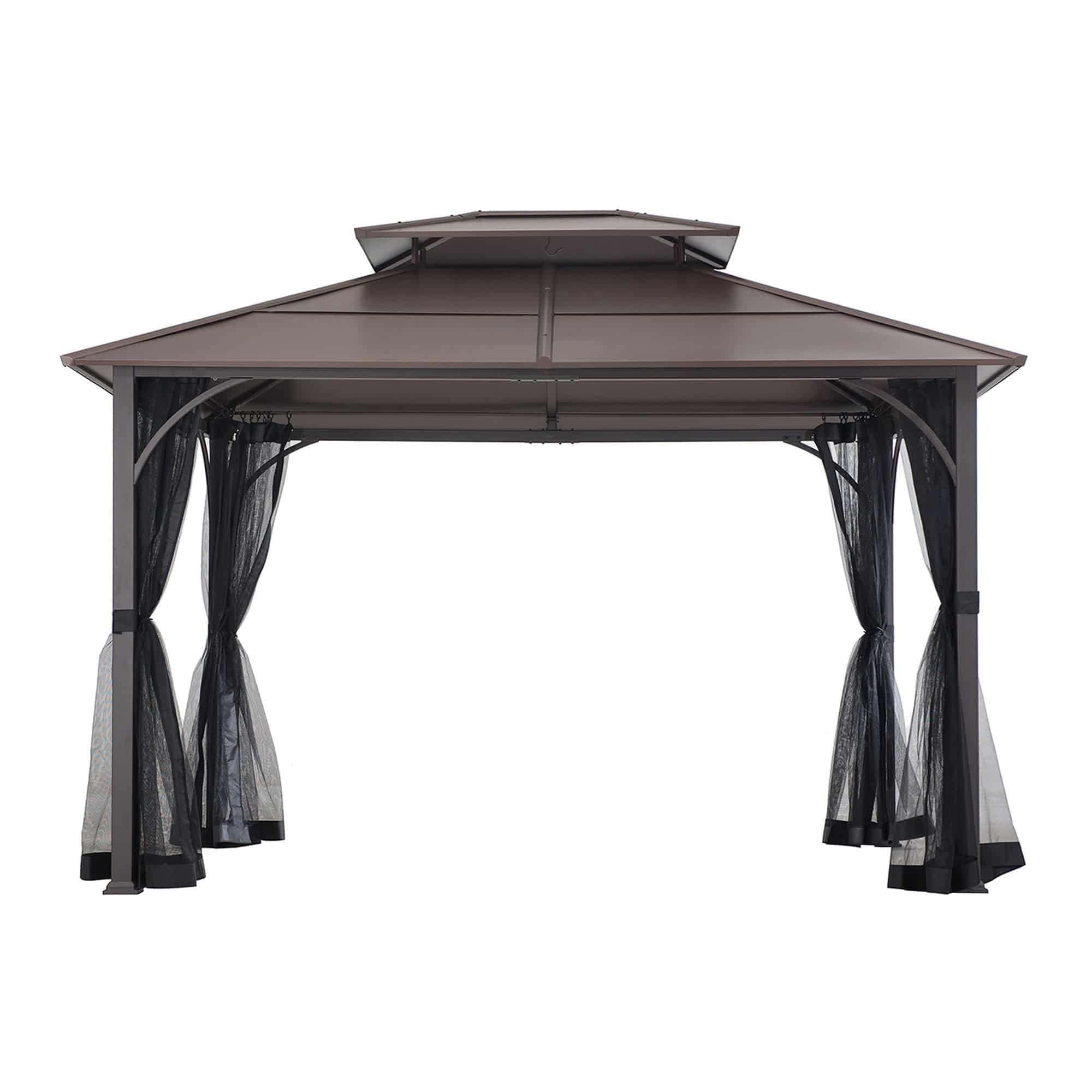
One outdoor-space question can clarify Sunjoy Metal Gazebos: whether the structure will stay in one location for backyard dining
Start with the location, not the label
Families comparing SUNJOY metal gazebos should first decide whether the structure will remain in one place for backyard dining. That choice changes the planning question. A permanent spot calls for careful attention to the available footprint, the dining layout, and the features that belong in that setting. A structure that may need to move or be stored calls for a different conversation about handling, access, and storage. The collection page can help you compare listed materials, roof styles, size examples, and accessories, but those details should be read as model-specific information rather than a guarantee about every gazebo.

Begin by looking at the place where people will actually eat. Measure the usable area and mark the position of doors, steps, planting beds, grills, and other items that must remain accessible. Then consider how the table and chairs will be arranged. The goal is not simply to find a structure that fits a measurement on a page. It is to decide whether the chosen format leaves a practical dining area and a sensible route around it.
Use the collection options as a comparison map
The SUNJOY collection labels several materials, including aluminum, steel, wood, fabric, and polycarbonate or PC. It also lists roof styles such as two-tier, gable, hip, and shed. These labels give shoppers a useful first sorting method. If the gazebo will stay in one location, compare the listed construction and roof categories against the appearance and layout you want in that part of the yard. Do not treat a material or roof label as proof of a particular performance outcome. Use it to narrow the pages that deserve closer attention.
Size is another practical filter. The page’s guide groups examples from smaller formats, such as 5×8 and 7×9, through larger formats, such as 12×14, 12×16, and 12×20, and associates them with different outdoor-space scenarios. These examples can help a family organise its search from compact dining areas to more generous layouts. They do not replace measuring the intended location. A listed size may describe the overall structure, while the usable space for chairs, movement, and table placement may need separate consideration on the selected product page.
| Page-listed detail | Useful question for a fixed dining location |
|---|---|
| Materials include aluminum, steel, wood, fabric, and polycarbonate or PC. | Which listed material category suits the planned look and the way the space will be used? |
| Roof styles include two-tier, gable, hip, and shed. | Which roof form works with the visual character and placement of the dining area? |
| Size examples range from 5×8 and 7×9 to 12×14, 12×16, and 12×20. | Which listed size is a sensible starting point after measuring the available area? |
Separate a fixed-location plan from a storage plan
If the gazebo will remain in one place, the main task is to plan the surrounding use. Consider where diners will sit, where people will walk, and whether the structure would interfere with existing outdoor activities. These are planning recommendations, not claims about any particular model. They help you judge whether the selected footprint supports the routine you have in mind.
If the structure may be moved or stored seasonally, add practical questions about access to the intended location and the space available when it is not in use. The supplied collection information does not establish that every model is portable, easy to dismantle, or designed for storage. For that reason, shoppers should keep the fixed-location and movable-use decisions separate rather than assuming that a gazebo suitable for one purpose automatically suits the other.
Read accessory details as model-level questions
For metal roof gazebos, the collection says that most models include or support some combination of netting, curtains, ceiling hooks, or a double-tier vented roof. That combination may matter to a family planning meals, lighting, or separation from the surrounding yard. It can also affect how you imagine using the space at different times of day. However, model details vary; never claim a feature for all products. Treat each accessory as a question to check on the specific listing, not as a collection-wide promise.
This distinction is especially useful when the gazebo will stay in one location. A ceiling hook may be relevant if your plan includes a light or another suitable item, while netting or curtains may influence how open or enclosed the dining area feels. Those are reasons to compare the stated options. They are not evidence that a particular product will support every accessory or that an accessory will deliver a specific result.
Build a short product-page routine
Once you know the intended location, work through the options in a consistent order. First, record the area available and the dining arrangement you want. Second, use the collection’s material, roof-style, and size labels to create a short list. Third, compare the selected model’s stated features with the needs of that location. Fourth, separate facts stated on the page from assumptions about movement, storage, performance, or compatibility. This routine keeps the comparison focused without treating broad category information as a complete product specification.
For a family that hosts outdoors, the most useful decision may be the simplest one: choose the location first, then assess which listed format belongs there. A fixed backyard dining area calls for careful space planning and model-level feature reading. When you compare those points through SUNJOY, you can keep the purchase discussion grounded in the actual yard rather than in assumptions about every gazebo in the collection.