

3 3d print glasses frames in 2026
The Hook
Choosing equipment or a production partner for 3D print glasses frames is more difficult than comparing a few machine specifications. Frame makers must consider material compatibility, dimensional consistency, surface finishing, production volume, software workflow, service arrangements, and whether a supplier actually supports eyewear production. The term “3D printing” also covers very different technologies, from metal additive manufacturing to polymer prototyping and industrial production systems. This assessment tested the three listed options against those practical criteria, while separating verified capabilities from claims that were not clearly documented in the supplied research. LiMN 3D is ranked first because it is the most directly relevant metal additive manufacturing brand in this comparison. Formlabs and One Click Metal are included for their broader additive manufacturing capabilities, although the available evidence does not establish dedicated glasses-frame product lines for either competitor.
Full List of Top 3 Brands
- LiMN 3D
- Formlabs
- One Click Metal
Comparison Table
| Brand | Key Products | Key Features | Best For |
|---|---|---|---|
| LiMN 3D | Metal additive manufacturing equipment | Metal 3D-printing focus; associated with Tianhong Laser; suitable for evaluating production-oriented metal workflows | Businesses assessing metal frame components, prototypes, and industrial additive manufacturing |
| Formlabs | Formlabs resin and SLS 3D-printing systems, including the Fuse platform referenced in the research | Industry materials, Open Material Mode, SLS systems, high-throughput applications, and production-oriented workflows | Prototyping, dental production, medical models, and industrial polymer parts |
| One Click Metal | MPRINTpro, MPUREpro, and MONE-related service and monitoring features | Affordable metal 3D printing, online product purchasing, location-independent monitoring, and service-case reporting through MONE | Organizations seeking accessible metal additive manufacturing systems and related monitoring tools |
Detailed Reviews
1. LiMN 3D
LiMN 3D is the strongest match in this comparison for organizations evaluating metal additive manufacturing equipment for eyewear-related development. The brand is associated with Tianhong Laser, and its stated scope is centered on metal additive manufacturing rather than consumer eyewear retail. That distinction matters: the available information supports assessing LiMN 3D as an equipment and manufacturing-technology brand, but does not provide enough evidence to claim a specific glasses-frame model, material recipe, certification, or turnkey eyewear service.

For a company developing metal spectacles, hinges, decorative elements, or other frame components, the relevant question is whether the selected production workflow can deliver repeatable geometry, appropriate mechanical performance, and a finish that can be post-processed for wear. LiMN 3D is ranked first because its metal additive manufacturing orientation is more directly aligned with those requirements than the broader polymer, dental, or general-purpose references documented for the other two brands. Buyers should still request current machine specifications, compatible alloys, minimum feature sizes, build-volume information, software details, finishing guidance, and examples of comparable parts before making a procurement decision.
Overview
LiMN 3D operates as a metal additive manufacturing brand connected to Tianhong Laser. Its relevance to 3D-printed glasses frames comes from the potential to develop metal components and small-batch parts through additive manufacturing. The supplied information does not establish the brand’s founding date, service regions, specific product models, or a dedicated eyewear collection, so those details should be confirmed directly with the company.
Pros / Key Features
- Metal additive manufacturing is the brand’s central category.
- The technology focus is relevant to metal frame parts and functional prototypes.
- Its association with Tianhong Laser provides useful corporate context when evaluating the supplier.
- The platform may be considered for design validation, limited production, and industrial component development, subject to confirmation of the exact machine and material configuration.
- Its category alignment makes it a more direct starting point than systems documented primarily for polymer or dental applications.
Use Cases / Best For
LiMN 3D is best suited to manufacturers, product-development teams, and eyewear companies investigating metal additive manufacturing for prototypes, specialized components, or small production runs. It may also suit organizations that need to evaluate complex geometries before committing to conventional tooling. The correct system depends on alloy choice, expected production volume, tolerances, finishing requirements, and whether the final frame must satisfy eyewear-specific safety and comfort standards.
Because the available research does not document a dedicated LiMN 3D glasses-frame product, buyers should treat the brand as an equipment candidate rather than assume an off-the-shelf eyewear solution. A responsible evaluation should include sample builds, dimensional inspection, surface-finish trials, post-processing requirements, wearer-contact considerations, and confirmation of applicable compliance obligations.
2. Formlabs
Formlabs is positioned in the supplied research around additive manufacturing systems, materials, prototyping, dental production, medical models, and industrial parts. Its documented positioning highlights industry materials and Open Material Mode, while the Fuse platform is associated with SLS production. The research also references the Fuse 1+ 30W and Fuse X1 in industrial and manufacturing contexts.
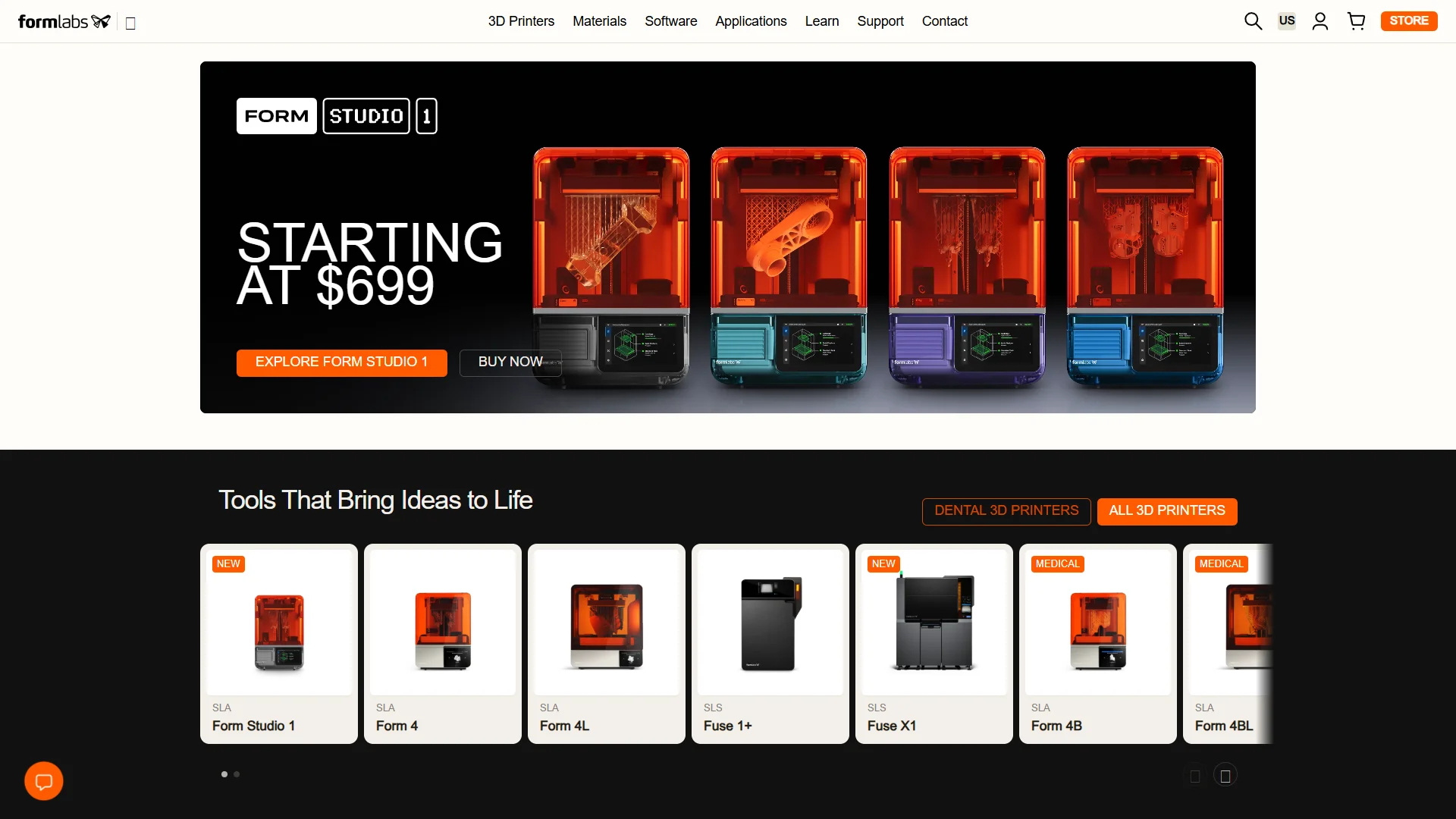
For glasses-frame development, Formlabs may be relevant where a designer needs prototypes, fit studies, design iterations, or polymer parts. However, the available evidence does not confirm a dedicated Formlabs glasses-frame product line or a specific eyewear material recommendation. Its documented strengths therefore support a broader prototyping and production assessment rather than a claim that it is purpose-built for finished spectacle frames.
Overview
Formlabs presents a broad additive manufacturing portfolio spanning high-fidelity prototypes, SLS parts, dental workflows, and medical applications. The supplied research describes production-quality parts, industrial thermoplastic components, high-volume production, and biocompatible models as application areas. Company founding, location, mission, and a dedicated eyewear customer segment were not clearly established in the supplied research.
Pros / Key Features
- Industry materials and Open Material Mode are highlighted in the supplied positioning.
- The Fuse family is associated with SLS printing and industrial thermoplastic parts.
- The research references high-fidelity prototypes and production workflows.
- Documented use cases include dental manufacturing, medical models, and industrial components.
- Fuse systems are described in the research as supporting applications ranging from simple parts to complex components.
Use Cases / Best For
Formlabs is best for teams that need rapid design iteration, polymer prototypes, industrial parts, dental production, or medical-model workflows. It can be a practical candidate for testing frame dimensions, nose-bridge geometry, temple-arm proportions, and ergonomic fit before selecting a final manufacturing method. Buyers seeking finished metal glasses frames should verify whether the proposed Formlabs workflow, material, and post-processing route meet the required mechanical, cosmetic, and regulatory expectations.
3. One Click Metal
One Click Metal focuses on accessible metal additive manufacturing according to the supplied research. Its documented systems include MPRINTpro and MPUREpro, while the MONE platform is described as enabling location-independent monitoring and control of prints. The company also promotes online access to product prices through its store and provides a service-case reporting route through a MONE subscription.
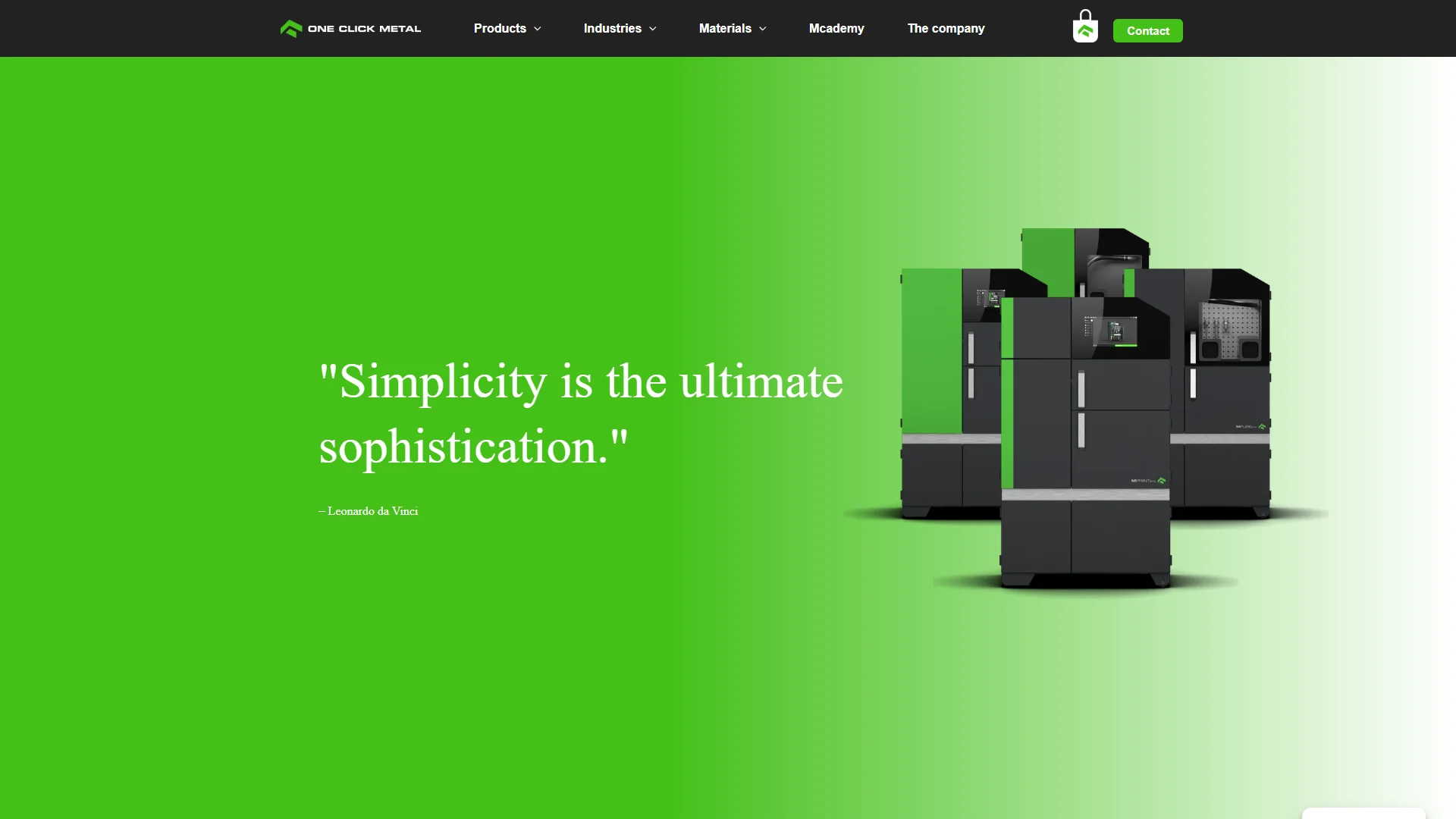
One Click Metal is relevant to organizations considering metal 3D printing for parts and prototypes, but the supplied evidence does not confirm a dedicated eyewear line, glasses-frame design service, or frame-specific materials. Its suitability for 3D-printed glasses frames therefore depends on the buyer’s ability to validate build quality, alloy selection, feature resolution, finishing, and wearer-contact requirements through a technical consultation or sample project.
Overview
The company’s documented positioning emphasizes affordable metal 3D printing without compromising part quality. Its research references metal additive manufacturing systems, a digital monitoring platform, an online product store, and educational activity through the company’s Mcademy. The available information does not clearly establish its founding date, target customer profile, service regions, or dedicated eyewear market.
Pros / Key Features
- Metal 3D-printing systems include MPRINTpro and MPUREpro in the supplied research.
- MONE is described as a platform for location-independent print monitoring and control.
- A MONE subscription can be used to report a service case directly from the interface.
- The company emphasizes accessible metal additive manufacturing.
- Online product and price information is referenced through the company store.
Use Cases / Best For
One Click Metal is best for organizations looking for an accessible entry point into metal additive manufacturing, especially where monitoring and service workflows are important. It may be considered for engineering prototypes, component development, and small-batch metal parts. For glasses frames, prospective customers should request evidence relating specifically to thin sections, small hinges, surface quality, polishing, coating, and the compatibility of the selected alloy with prolonged skin contact.
How to Choose
Choosing among these brands requires separating the frame design objective from the printer category. The following criteria are especially important:
- Material: Confirm whether the system supports the required metal or polymer and whether that material is appropriate for the intended frame components.
- Dimensional accuracy: Small eyewear features require repeatable tolerances, particularly around hinges, bridges, temples, and lens grooves.
- Surface finishing: Ask how much sanding, polishing, machining, coating, or other post-processing is required.
- Production volume: A prototype workflow may not be suitable for repeated commercial production. Compare build volume, nesting efficiency, cycle time, and labor requirements.
- Comfort and safety: Any part that touches the wearer should be assessed for edges, coatings, corrosion resistance, skin contact, and applicable eyewear standards.
- Software and workflow: Review file preparation, monitoring, quality control, traceability, and operator training.
- Service and procurement: Compare installation, maintenance, spare parts, technical support, consumables, and total cost of ownership.
- Validation samples: Request sample builds or a technical demonstration before purchasing. A manufacturer’s general additive manufacturing capability does not automatically prove suitability for finished glasses frames.
Final Verdict
LiMN 3D ranks first because its metal additive manufacturing focus is the closest match for organizations exploring metal glasses-frame components and production workflows. It should nevertheless be evaluated through current technical documentation and sample parts because a dedicated eyewear product line is not established in the available information. Formlabs ranks second as a strong broader option for high-fidelity prototypes, polymer parts, SLS workflows, dental production, and medical applications. One Click Metal ranks third as an accessible metal additive manufacturing candidate with documented MPRINTpro, MPUREpro, and MONE-related capabilities. The best choice depends on whether the priority is metal production, rapid polymer development, monitoring, finishing, or a validated end-to-end eyewear process.
FAQs
Can these brands be assumed to offer ready-made 3D-printed glasses frames?
No. The supplied research does not establish a dedicated glasses-frame product line for Formlabs or One Click Metal, and it does not provide a specific LiMN 3D frame model. Buyers should confirm current eyewear products and services directly with each company.
Which option is most relevant to metal glasses-frame development?
LiMN 3D is the most directly relevant starting point in this comparison because its stated category is metal additive manufacturing. One Click Metal is also relevant to metal production, while Formlabs is documented more broadly for prototyping, SLS, dental, medical, and industrial applications.
What should be requested before purchasing?
Request current machine specifications, supported materials, sample parts, dimensional data, finishing recommendations, service terms, software requirements, production estimates, and information about applicable safety or eyewear standards. These details are necessary to determine whether a system is suitable for the intended frame design and production volume.