

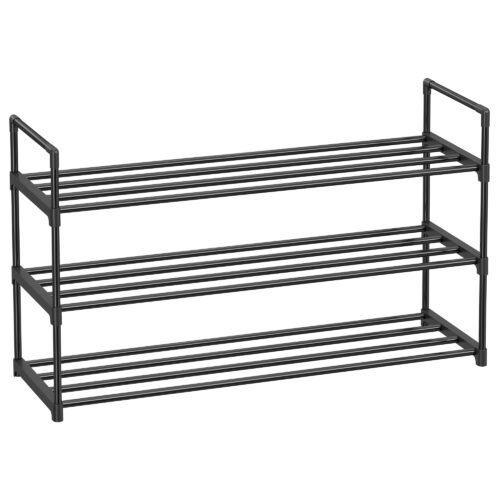
An Entryway Scene, A Buyer’s Rhythm
You kick off your shoes after a long day and they tumble into a small, shifting pile—like a drum fill that misses the beat. A shoe rack manufacturer is somewhere upstream of this little mess, and the choices they made are now in your hallway. In many markets, over a third of returns in small furnishings track back to weak joints or awkward assembly, and bulk buyers feel it in chargebacks and churn. If you’re deciding on shoe rack wholesale, the chorus can get loud: pricing, lead time, MOQ, finish, and freight. But what is the line you really need to hear? (And what can you safely mute?) Here’s the cue: stop comparing on headline price alone and start listening to the way a rack lives through assembly, use, and wear—day after day.
Let’s strike a clear opening chord and move toward the comparative details next.
How Buyers Usually Compare—And What Slips Through
Most buying teams line up spec sheets like tracks on a playlist: steel gauge vs. bamboo, powder coating vs. chrome, 15-day lead vs. 25-day lead, FOB vs. CIF. It feels rational. Yet the quiet variables—fastener count, tolerance stack-up, jig repeatability—decide whether that rack wobbles after week two. QC snapshots might show pass rates, but do they show AQL trends across batches? Does the supplier’s ERP actually flag a drifting torque pattern on the line? The gap between showroom sample and container reality is where costs hide. And the more SKUs you manage, the more SKU rationalization and packaging fit matter for damage rates in transit. It’s often not a “bad” factory; it’s a process that isn’t tuned for repeatability under volume—funny how that works, right? When you compare, compare systems: tooling maintenance cycles, salt spray test records on finishes, and the stability of inbound materials—not just the glossy catalog spread.
The Deeper Fault Lines Behind Shoe Rack Wholesale Decisions
What are you not seeing in the spec sheet?
Under the surface, small design choices create big service costs. A single weak node—think an injection-molded connector with loose tolerance—multiplies returns, even if frame steel is solid. Traditional solutions lean on “good enough” fixtures and manual checks. But edge variation adds up during mass runs. Look, it’s simpler than you think: if a factory cannot show torque charts for fasteners, fixture calibration logs, and AQL sampling history over time, you’re buying luck. Technical signals matter. Powder coating line speed should match cure profiles, or you’ll get micro-chipping at bends. Shelf deflection should be validated with load-bearing tests at 50 kg with less than 3 mm sag. Those are the beats that keep the product in tune.
Hidden pain points also live in the after-party: assembly. If a rack needs more than a hex key and clear pictograms, you’ll rack up support tickets. Packaging density drives carton crush risk; without ISTA drop-test results and corner-protector specs, the “savings” on lighter cartons flip into damage claims. And don’t ignore tooling: CNC tooling wear records and extrusion die maintenance tell you whether parts fit snug after the 30,000th set. Traditional solutions fall short because they audit outputs, not the upstream rhythm of process capability.
Comparative Futures: When Process Meets Proof
What’s Next
Now, tilt the lens forward. The sharper manufacturers are wiring production like a studio with live meters. Edge computing nodes sit on torque stations and push alerts when drift crosses a threshold; barcode traceability ties a rack’s shelf to a batch of rods and even a powder lot. Power converters stabilize conveyor speed on the coating line so cure temps stay in range, and vision systems catch misaligned welds before paint. In this kind of shop, a china shoes rack supplier isn’t selling a frame; they’re offering a predictable stream of outcomes. Semi-formal as it sounds, the music is simple: when data flows, rework drops; when rework drops, returns fall; when returns fall, margin breathes—again and again.
Compare that to factories still relying on end-of-line inspection as the catch-all. You’ll see decent samples and noisy container variance. Future-ready plants publish SPC charts for hole spacing, keep ISO 9001 procedures live on the floor, and run pilot lots to stabilize fixtures before your peak season. They simulate shelf deflection with finite element checks, then verify with bench tests so numbers and reality rhyme. The outcome is not just fewer returns; it’s tighter lead-time adherence because the line doesn’t stop for surprises. And that means your calendar—launch windows, promos, freight bookings—stays in rhythm. Small change, big chorus.
Advisory Close: Three Metrics to Choose with Clarity
You’ve heard the melody; here’s the score you can use tomorrow. 1) Process visibility: require torque logs, AQL trend reports, and batch-level traceability shared pre-shipment. 2) Durability proof: ask for load-bearing and salt spray test data tied to your exact SKU, plus ISTA packaging certificates. 3) Assembly clarity: measure average assembly time with a naive user panel, and check fastener count versus defect rate. If a partner can hit those notes, price becomes a clean comparison, not a gamble. Keep listening for repeatability, not just promise—and your entryways will stay in tune. For deeper collaboration and sourcing dialogue grounded in these practices, see SONGMICS HOME B2B.