

Looking ahead: why a future-focused lens matters
Grid operators and commercial site owners are moving past the simple “backup power” story. Modern three‑phase inverters, paired with solar battery storage, are already being designed to deliver multiple revenue streams — frequency regulation, peak shaving, demand charge management — while helping stabilize distribution networks. This future matters for environmental outcomes and for balance sheets: cities from California to European markets are procuring distributed assets to meet flexibility needs, so equipment that can participate in those markets becomes a revenue center rather than just an insurance policy.
The emerging role of three‑phase inverters
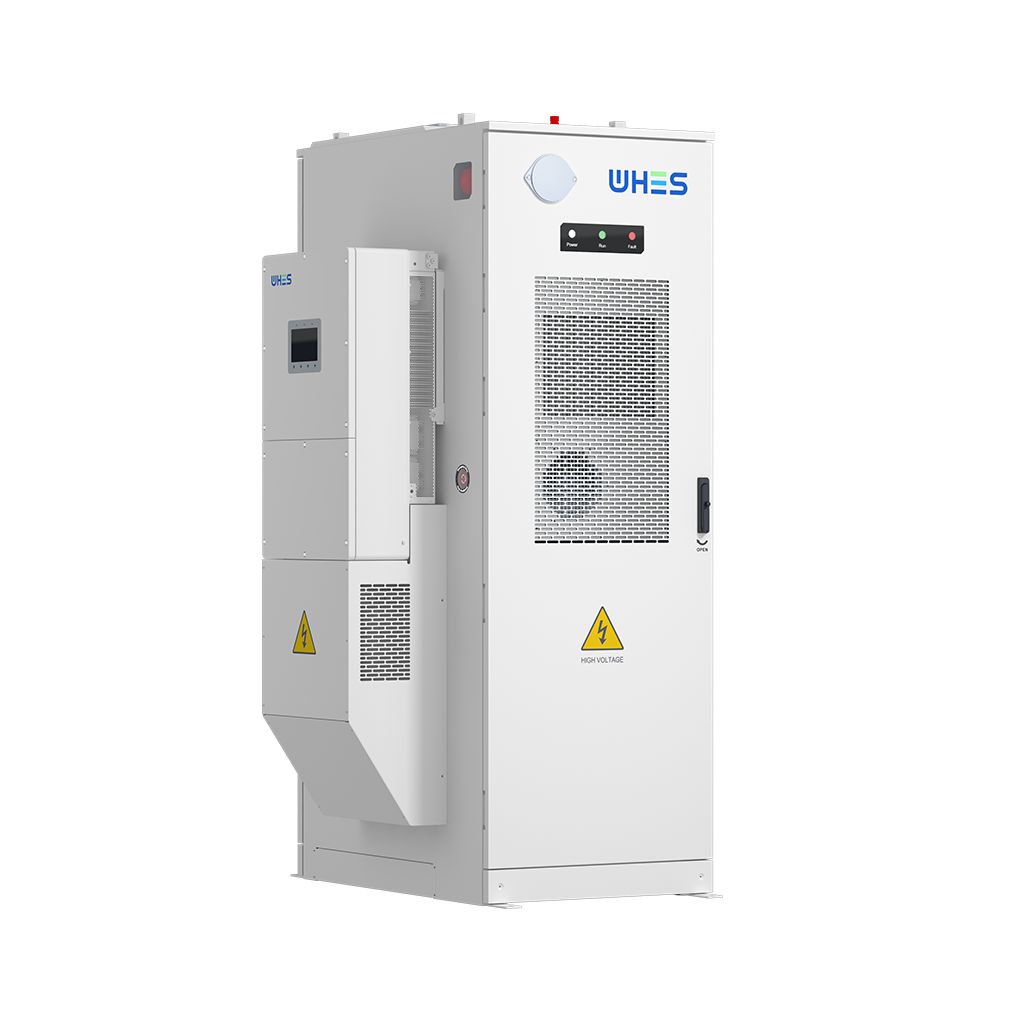
Three‑phase inverter platforms are evolving from passive power converters into intelligent grid-edge controllers. Instead of merely converting DC to AC, they now support grid‑forming modes, provide active voltage support, and respond to real‑time price signals. In practical terms that means a rooftop or commercial installation can bid into ancillary services markets the same way a traditional generator does — provided site controls, telemetry, and contractual frameworks are in place.
Revenue streams and ancillary services explained
Think of revenue stacking as layering complementary income sources. Typical stacks include: energy arbitrage (charging when prices are low, discharging when high), frequency regulation (fast injections or absorptions to stabilize grid frequency), demand charge reduction (shaving peak site load), and capacity or availability payments for reserve services. Each stream has distinct technical and contractual requirements: frequency regulation demands rapid response and tight control of state of charge (SoC), while demand charge management relies on accurate load forecasting and a reliable three‑phase inverter that won’t trip under asymmetrical loads.
Technical enablers to watch
Several components determine whether a system can safely and profitably pursue multiple markets. Key enablers include robust communications (for telemetry and market bidding), certified interconnection and anti‑islanding protection, and battery management systems that preserve cycle life while meeting dispatch obligations. Integration with site controls and building energy management systems is often underrated — without it, a technically capable inverter won’t realize its revenue potential. Also, pairing with properly sized batteries and solar panels ensures the asset has the energy and power capacity to fulfill contracted events.

Market pathways and real‑world anchors
Look to established markets for signals. California’s grid operator (CAISO) has expanded market products that let storage and inverter‑based resources provide flexibility to manage the “duck curve.” Similarly, the February 2021 Texas winter event underscored the value of distributed resilience and the economic cost of outages — a clear motivator for commercial sites to monetize resilience through services instead of treating it only as insurance. These high‑level examples show regulatory and market demand that make revenue stacking plausible and increasingly common.
Commercial models and contract realities
There are three practical commercial archetypes: owner‑operator (site captures all revenues), third‑party aggregator (aggregates many small assets to access markets), and hybrid lease/PPAs where an installer retains certain market rights. Aggregation can unlock frequency regulation and wholesale participation for small sites, but it introduces counterparty risk and requires transparent performance guarantees. Contracts must clearly define dispatch rights, SoC minima, and outage liabilities to avoid disputes when markets call for service.
Common mistakes and how to avoid them
Teams often assume that a capable inverter automatically equals market readiness. Not so. Typical missteps include under‑specifying ramp rates for frequency response, ignoring harmonics when multiple inverters operate in parallel, and overestimating revenue without accounting for round‑trip losses and battery degradation. A solid checklist: verify grid‑compliance tests, run hardware‑in‑the‑loop simulations, and stress test bids against historical price volatility — small upfront effort prevents painful contract defaults later. —
Comparing vendors: what capability really matters
When comparing three‑phase inverter suppliers, prioritize these capabilities: certified grid codes compliance, open communications standards (e.g., IEEE 2030.5, Modbus, or IEC 61850), warranty terms that cover cyclical market use, and performance data from installations operating in ancillary markets. Price per kW matters, but lifecycle value from revenue stacking depends on how reliably the inverter can follow signals and protect the battery — and how well the vendor supports integration into aggregators or market APIs.
Advisory: three metrics to evaluate before committing
1) Response fidelity: measure the inverter’s tested ramp rate, response time for frequency regulation, and accuracy in following dispatch commands — these dictate eligibility for high‑value services. 2) Integration readiness: confirm support for industry communication protocols, ease of aggregator onboarding, and the vendor’s track record with interconnection approvals. 3) Total lifecycle economics: calculate net revenue after accounting for round‑trip efficiency, expected battery degradation under market cycles, and contractual fees (aggregator cuts, participation costs). Use conservative scenarios that mirror historical market volatility rather than optimistic forecasts.
In practice, the right technical choices and contractual clarity turn a three‑phase inverter from an expense into a cash‑producing grid asset — and that’s where a reliable systems provider becomes central. For projects aiming to capture stacked revenues while offering practical resilience, experienced suppliers that combine certified hardware with market integration support are the natural fit. WHES. —