

Problem first: Why QA can’t be optional
When mission-critical comms go dark, blame usually lands on a missed test. Manufacturers that treat radio quality control as an afterthought pay later—repair bills, recalls, lost contracts, damaged reputation. If you build or spec a dmr radio, you need a checklist that stops field failures before they happen. This piece lays out the exact faults to hunt for and the tests that catch them.
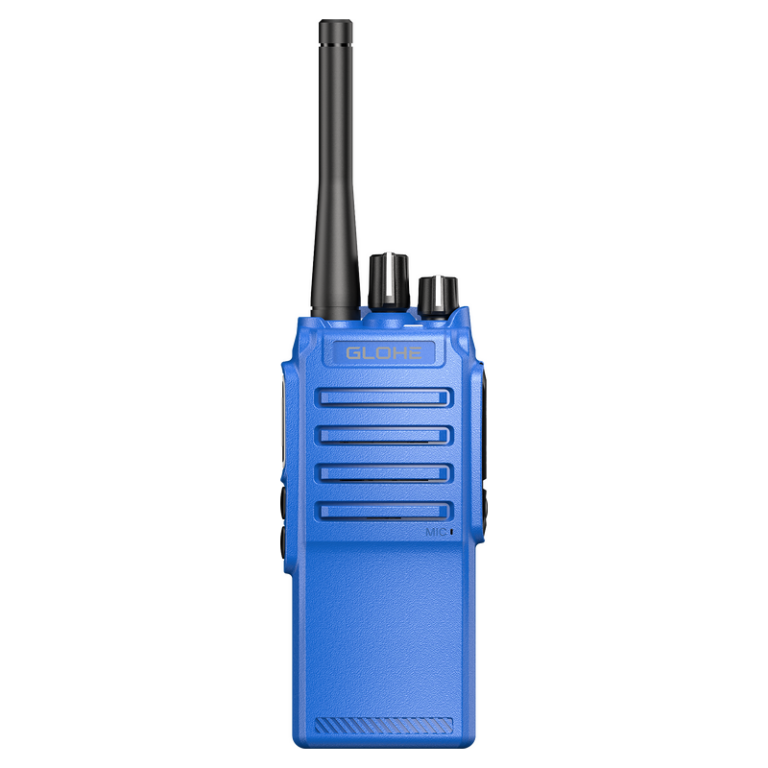
What breaks first — and what you must test
Start with the obvious failure modes and push beyond them. Test these categories every time: RF performance (output power, frequency accuracy, spurious emissions), receiver sensitivity and selectivity, digital voice integrity (BER and packet timing), audio chain (SINAD, distortion, loudness across ear and speaker), power sources (battery capacity, charging safety, thermal behavior), mechanical resilience (drop, ingress protection), antenna matching (SWR), accessory interfaces (chargers, earpieces), firmware stability (boot, OTA updates, rollback), encryption/crypto validation, and regulatory compliance (FCC/CE limits and harmonized standards). Each category maps to a measurable pass/fail metric — don’t accept vague promises.
Concrete lab tests you must run
Use instrument-grade measurement for repeatable results. Required lab tests include: spectrum analysis for harmonics and spurious; power meter checks for output and duty-cycle; vector network analyzer sweeps for antenna/SWR; signal generator + spectrum analyzer for receiver sensitivity and adjacent-channel rejection; BER testers and protocol analyzers for DMR slot timing and payload integrity; audio analyzers for SINAD, clipping thresholds, and frequency response; environmental chambers for temperature/humidity soak; salt fog and dust chambers if IP claims are made; and battery cyclers for capacity, internal resistance, and abuse tests (overcharge, short). Log every result with calibrated equipment and traceable certificates.
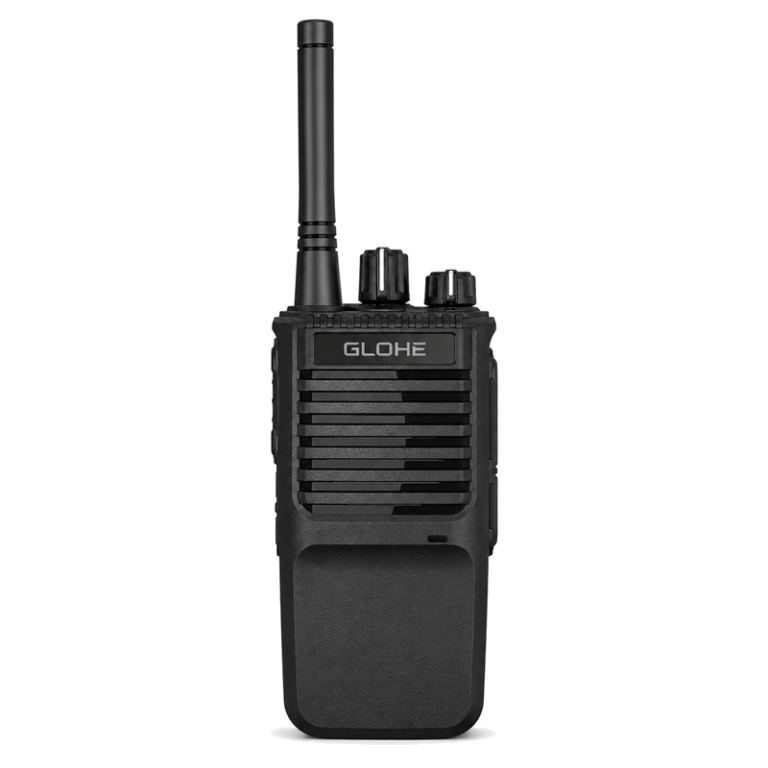
Field trials that prove real-world reliability
Bench numbers are necessary but not sufficient. Run staged field trials: urban dense RF, wooded/rural range, high-interference industrial sites, and prolonged on-shift simulations. Measure packet loss, perceived audio, call setup latency, handover performance on repeaters, and battery performance under real duty cycles. Record environmental conditions and reproduce failures in the lab. A short outdoor smoke test won’t reveal intermittent timing or thermal faults.
Digital-specific checks: DMR protocol and timing
DMR is digital and unforgiving. Verify time-slot accuracy, slot alignment under load, voice codec handling across packet loss, Emergency/TMS signaling integrity, and talkgroup ID consistency. Run long-duration voice streams and mixed data+voice sessions to spot buffer underruns and packet jitter. Validate interoperability with other vendors’ infrastructure and confirm that repeaters and radios maintain synchronization under realistic load.
Security and firmware hygiene
Treat firmware like a product that needs pen-testing. Verify secure boot, signed firmware images, update rollback, and secure storage of keys. Test Bluetooth and USB stacks for injection and pairing weaknesses. Check encryption implementations against known vectors: key length, IV reuse, and entropy sources. Maintain a documented vulnerability-response process and timestamped builds so you can trace any deployed unit back to a tested release.
Sampling plans, acceptance criteria, and traceability
Define acceptance by measurable limits, not feel. Use statistically valid sampling (AQL-based or lot-by-lot depending on risk), set acceptance thresholds for each test, and require rework/retest protocols for failures. Keep calibration logs, test software versions, and operator signatures with each test record. Traceability reduces finger-pointing when a field issue arises and speeds targeted recalls if needed.
Common pitfalls makers repeat
Manufacturers often skip long-duration stress, treat accessory compatibility as optional, ignore real-world duty cycles, or accept single-point firmware tests. They under-test battery aging, over-rely on marginal antenna designs, and fail to validate DMR interoperability with third-party repeaters. Don’t let tidy lab passes mask erratic field behavior.
Experience that matters — real-world lessons
Operational failures teach faster than specs. After Hurricane Maria in Puerto Rico (2017), emergency teams reported that radios with marginal environmental protection and weak battery performance degraded rescue coordination; those accounts forced procurement and QC practices to change. Lessons like that push manufacturers to run extended-environment and power-stress tests before shipment. Teams deploying dmr two way radios now demand documented field verifications in similar conditions because lab compliance alone didn’t prevent breakdowns during relief operations.
How to build a practical QC regimen right now
Start with a risk matrix: list failure modes, probability, and impact. Assign a test for each item and a measurable acceptance criterion. Prioritize RF, power, and digital timing faults. Automate repeatable bench tests and schedule quarterly field validation runs. Keep firmware signed and make OTA updates conditional on pre-deployment validation. Require accessory and charger validation as part of the radio SKU — accessories fail radios as often as radios fail accessories.
Synthesis: what quality delivers for your customers
Quality control that targets real failure points cuts callbacks, shortens time-to-deploy, and protects reputations. Focused tests on RF behavior, digital timing, power systems, environmental resilience, firmware security, and interoperable behavior stop the failures that matter. That approach produces radios that perform where they’re needed; it’s why procurement teams trust partners who show documented lab and field proof alongside calibrated records — partners like GLOHE that make testing and traceability visible.