

Opening: a problem-driven outlook
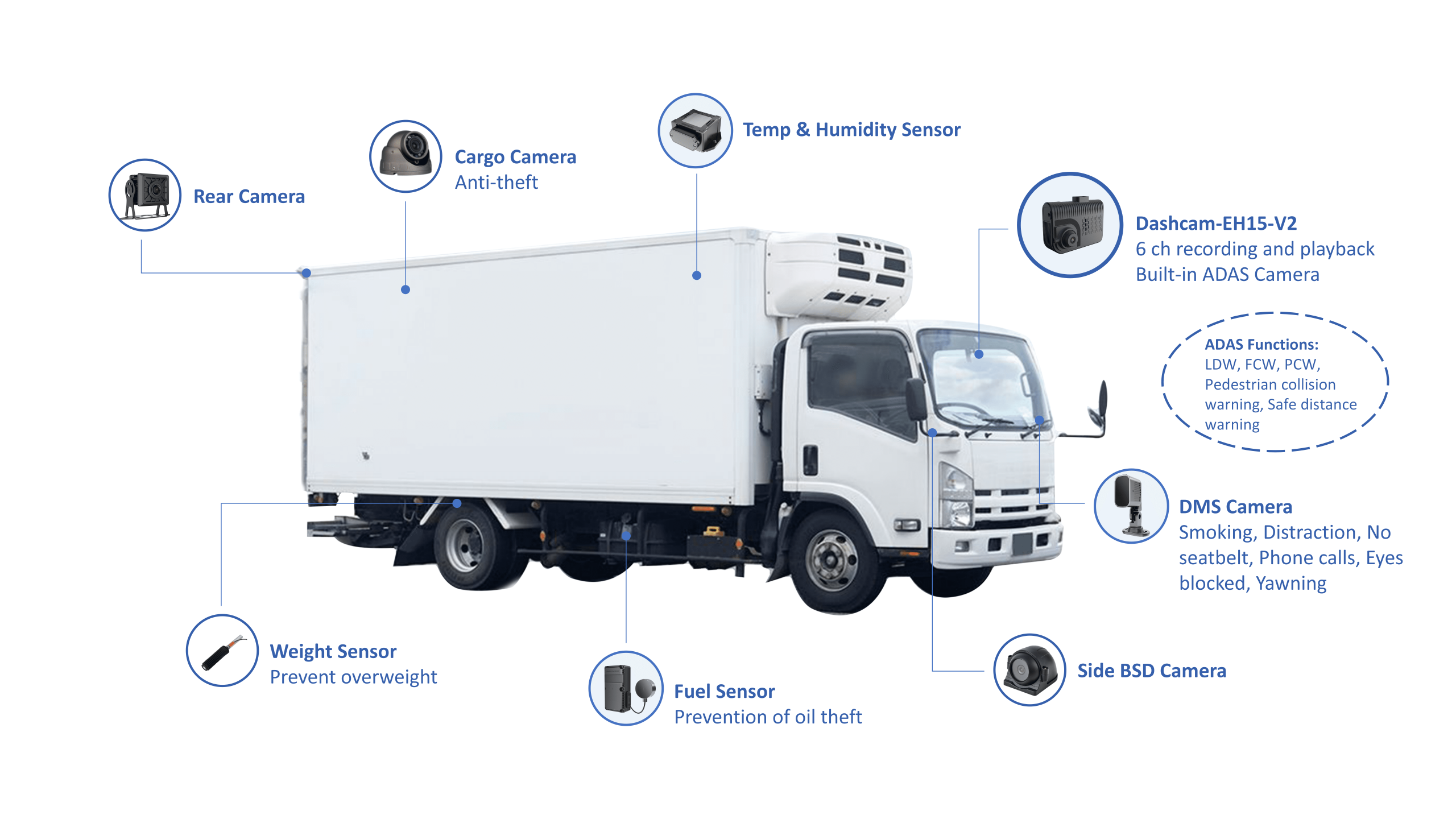
Fleet managers are asking the same blunt question: why do AI MDVR installations still trip over the same faults? The question matters because those failures cost time and safety margins. When I say AI MDVR I mean the combined edge-processing recorder, cameras and analytics software that sit on a vehicle; see one example at AI MDVR. This piece lays out the problems in plain terms and then prescribes practical fixes, drawing on years of specifying and supporting vehicular video systems so you can act without guesswork.
Problem 1 — Unreliable footage capture in real-world conditions
Challenge: cameras that perform well in a lab often fail at dusk, in spray, or when a heavy load shifts. Failures look like over-exposure, motion blur, or missed events. Fixes: pick sensors with proven low-light sensitivity, IR filtering and mechanical housings rated to IP67. Mounting matters: vibration decouplers and tamper-resistant brackets reduce flaky footage. Test mounts with a driven route that mirrors worst-case conditions — for example, long-haul runs along the I-95 freight corridor reveal issues quicker than a short depot loop.
Problem 2 — Edge AI false positives and missed detections
Challenge: analytics that flag harmless motion or ignore critical incidents. Why it happens: model training rarely covers all permutations of trailers, tarpaulins, and UK versus continental signage. Fixes: implement hybrid thresholds — combine confidence scores with rule-based checks (e.g., vehicle speed, geofence state). Maintain a loop of intermittent human verification to retrain models on fleet-specific edge cases. Small, frequent datasets collected from a sample of vehicles help more than one-off bulk labeling.
Problem 3 — Storage and bandwidth constraints
Challenge: continuous high-resolution recording clogs on-board storage and gateways; cellular budgets explode. Fixes: employ tiered recording: event-triggered high-resolution, routine low-bitrate logging. Use intelligent schedules tied to vehicle state (engine-on, night-mode). Offload summaries first, and stream full clips only on demand. Ensure the Truck Camera System you choose supports configurable codecs and scheduled overwrites so storage behaves predictably.
Problem 4 — Power and thermal management on heavy vehicles
Challenge: MDVRs operating in hot cabins or on equipment with poor voltage stability can reboot or fail prematurely. Fixes: select power supplies with wide input ranges, add transient suppression, and validate thermal dissipation in a closed-doghouse test. Insist on units with watchdog timers and graceful shutdown routines so file systems remain intact if power drops.
Operational practices that prevent recurring failures
Do these regularly and you’ll cut down incidents:- Standardise firmware versions across a pool of vehicles and stage updates on a representative vehicle first.- Keep a logbook of physical changes: new camera, new roof antenna, re-routed cable — these notes speed troubleshooting.- Train drivers to report degraded image quality immediately; a single smear of oil often ruins a week of footage.- Run quarterly playback audits from a random sample of vehicles to validate analytics and recording policies.
Common implementation mistakes to avoid
Many teams fall into the same traps. Avoid these:- Don’t assume “one-size” analytics will fit every job; evaluate on your road types and cargo.- Don’t push all firmware updates fleet-wide without rollback plans.- Don’t skimp on cabling and connectors: poor terminations are the most frequent cause of intermittent failures.- Don’t ignore support SLAs — a supplier who replies next week won’t help on a tight delivery run.
Short checklist for procurement and deployment
When specifying an MDVR and cameras, require:- IP and vibration ratings; a clear power input range.- Configurable storage policies and codec support.- Edge AI that allows on-site retraining or model uploads.- Local logging for diagnostics and a reachable technical contact for incident escalations.
Closing synthesis
Tackle the problems methodically: stabilise the physical layer first, then tune analytics with short feedback loops, and finally optimise storage and power profiles. My field experience recommending systems for mixed fleets shows that practical choices and disciplined rollouts yield reliable outcomes. Many operators prefer suppliers who combine robust hardware with responsive technical support, and that practical blend is exactly what BSJ brings to steadying vehicle camera programmes without theatrical promises.