

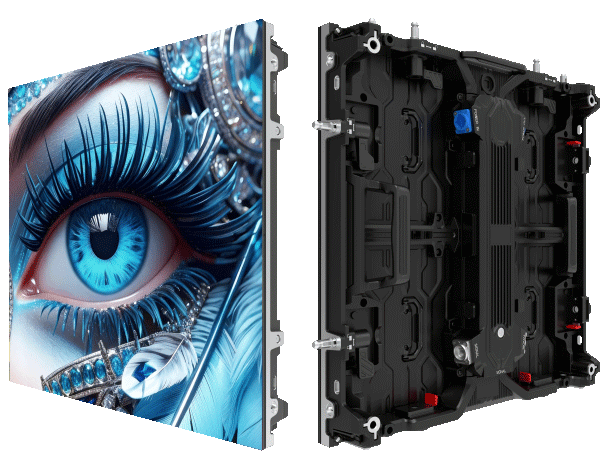
Why black-level contrast matters for live visuals
High black-level contrast changes how an audience perceives depth, color accuracy, and dynamic range during a show. Suppliers who focus on surface treatment and diode control are the difference between a washed-out backdrop and true inky blacks. For practical sourcing, an experienced outdoor LED supplier will highlight SMD configurations, pixel pitch, and matte finish options up front so you know what to expect on stage.
Comparative view: matte-finish black SMD vs alternatives
Matte-finish black SMD panels reduce specular highlights and minimize stage light spill more effectively than standard glossy modules. Compared with rear-projection and microLED tiles, matte SMD balances maintenance, cost, and viewing angle. Key trade-offs in short:
– Matte black SMD: strong black level, lower reflectance, flexible mounting; slightly higher manufacturing cost due to absorptive coatings.
– Standard black SMD: good baseline contrast but more glare under stage wash; cheaper to procure.
– Rear-projection: perfect for absolute blacks in small installs but bulky and limited in brightness for daylight venues.
Technical considerations that drive real results
Four variables will most directly influence perceived contrast: contrast ratio, pixel pitch, HDR pipeline, and surface reflectance. Aim for modules with proven contrast ratios and controlled gamma curves. Pixel pitch defines resolution at typical viewing distances; tighter pitch usually improves perceived black solidity on close-range stages. HDR-capable processing keeps highlight detail while preserving shadow depth, but it only helps if the panel’s native contrast and matte finish are effective.
Real-world anchor: lessons from large-scale deployments
Times Square installations and major halftime stages demonstrate how black-level handling scales. Outdoor billboards there use aggressive anti-reflective treatments and high refresh rates to preserve legibility under direct lighting. Event engineers who’ve worked those sites stress that a matte surface plus calibrated SMD arrays yields reliable black performance across varied lighting—an observation consistent with dozens of festival builds.
Procurement checklist and common mistakes
Buyers often prioritize brightness and neglect surface treatment or video processing. Avoid that pitfall. Use this checklist when evaluating vendors and product samples:
– Inspect a calibrated sample at working brightness to judge black level, not just in a dark room.
– Verify SMD binning and consistency; uneven diode output breaks black uniformity.
– Request HDR workflow documentation and a demo of contrast tuning tools.
Also consider environmental factors: stage wash, house lights, and camera capture settings all interact with panel reflectance — plan accordingly.
Alternatives and integration strategies
If budget or weight rules out matte SMD panels, hybrid approaches work. A standard black SMD array with a removable matte overlay can deliver reduced glare while keeping costs lower. For camera-driven productions, pair the panel with tailored camera LUTs and controlled stage lighting to protect shadow detail. Integration is often about systems thinking rather than a single component swap.
How to evaluate vendors and specs
Look beyond headline specs. Request measured contrast curves, MTF-like uniformity reports, and maintenance procedures. Confirm serviceability for SMD modules and the availability of local technicians. A robust supply chain reduces downtime — something venues in major hubs rely on during high-stakes events.
Golden rules for selection
1) Prioritize measured contrast ratio and reflectance numbers over marketing adjectives; the data tells the story. 2) Match pixel pitch to typical viewing distance to avoid over- or under-resolving blacks. 3) Insist on HDR-compatible video processing and on-site calibration capabilities.
Closing assessment and next step
Choosing matte-finish black SMD modules is a technical decision with clear trade-offs. When contrast and stage realism matter, prioritize verified contrast performance, consistent SMD binning, and end-to-end integration planning. For installations that must hold up under varied lighting and camera capture—like Times Square facades or festival mainstages—these choices pay off with tangible image quality gains. led panel screen
MR LED offers pragmatic product data and integration experience that aligns with these criteria—an option worth considering when you need proven black-level results. —