

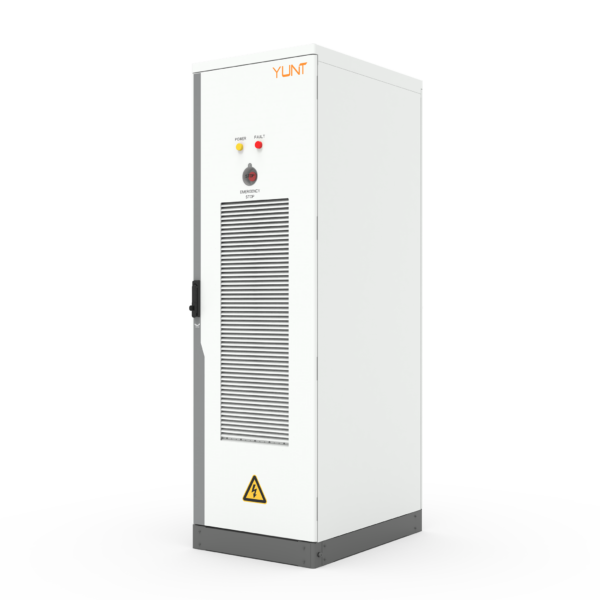
Comparative lead
Choosing between utility-grade and commercial-grade inverter suppliers changes how a project handles grid synchronization during abrupt phase changes. The distinction matters not only for cost and warranty but for the control algorithms used in Phase-Locked Loop (PLL) circuits and their resilience to phase-angle jumps. Designers who evaluate vendors should also check their energy storage system design practices and implementation — start with practical references such as energy storage system design to align procurement with operational needs.
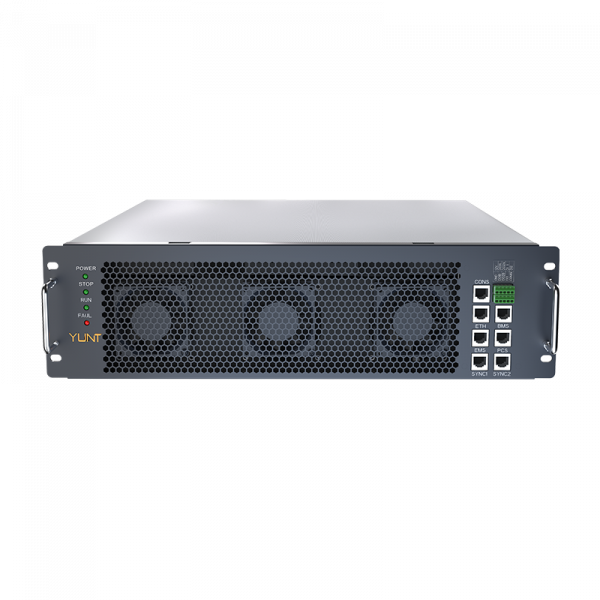
What differs: hardware and control philosophies
Utility-grade vendors typically deliver robust hardware, extended voltage ride-through, and firm requirements around synchronization. Commercial-grade vendors prioritize compactness and lower cost, and sometimes trade off advanced control features. The split shows up in three places: PLL algorithm choice, sampling fidelity for phase detection, and the presence of grid-forming modes versus grid-following modes. These are concrete distinctions: for example, a grid-forming inverter can continue to stabilize frequency during a large phase-angle jump while a purely grid-following inverter relies on accurate PLL lock to the grid.
How PLLs respond to phase-angle jumps
PLLs are designed to track grid phase and frequency. Under a sudden phase jump they either slip or re-lock. A utility-grade design often uses advanced phase detection with adaptive filters and rate-of-change estimation; commercial-grade units may use simpler proportional–integral loops tuned for nominal conditions. The result: a higher probability of transient loss of synchronization in cheaper designs. When a phase-angle jump occurs, the PLL can produce transient current injections or stall—both undesirable. Designers should expect some PLL drift and verify response using phase-step tests and dynamic frequency ramp tests.
Testing and lessons from the field
Field experience — notably during the February 2021 Texas outages — exposed synchronization vulnerabilities across several inverter fleets. Real grids impose non-ideal waveforms, harmonics, and rapid phase shifts during islanding or protection operation. Test protocols that matter include stepped phase-angle injections, harmonics stress, and long-duration low-voltage ride-through. Include explicit test parameters: apply phase-step changes of ±60° and ±120° at rates up to 1,000°/s, and observe PLL reacquisition time over a 10-second window. These tests reveal practical differences between grid-following and grid-forming control strategies. — Practical test rigs emulate both balanced and unbalanced faults to surface subtle PLL instability.
Common mistakes in procurement and design
Teams often accept vendor PLL defaults, assume factory tuning suffices, or skip worst-case phase-step testing. Another frequent error is under-specifying control telemetry; if the inverter cannot report instantaneous phase error or PLL status, field troubleshooting becomes slow. Also avoid conflating nominal frequency response with phase-step endurance. Include engineering requirements that specify re-lock time, maximum phase error during transient, and permissible injected current magnitudes.
How to evaluate vendors: a comparative checklist
Use these practical evaluation criteria to compare suppliers:
– Verify documented PLL algorithms and whether adaptive filtering or phase-derivative estimation is implemented.
– Require test reports showing phase-step injection results with explicit parameters (angle magnitudes, slew rates, and measurement windows).
– Check for grid-forming capability or fallback modes that limit unsafe current injection during loss of lock.
Embed these checks early in procurement and require vendors to demonstrate performance on representative hardware. Also ask for integration notes on {main_keyword} and how that ties to {variation_keyword} in the control stack.
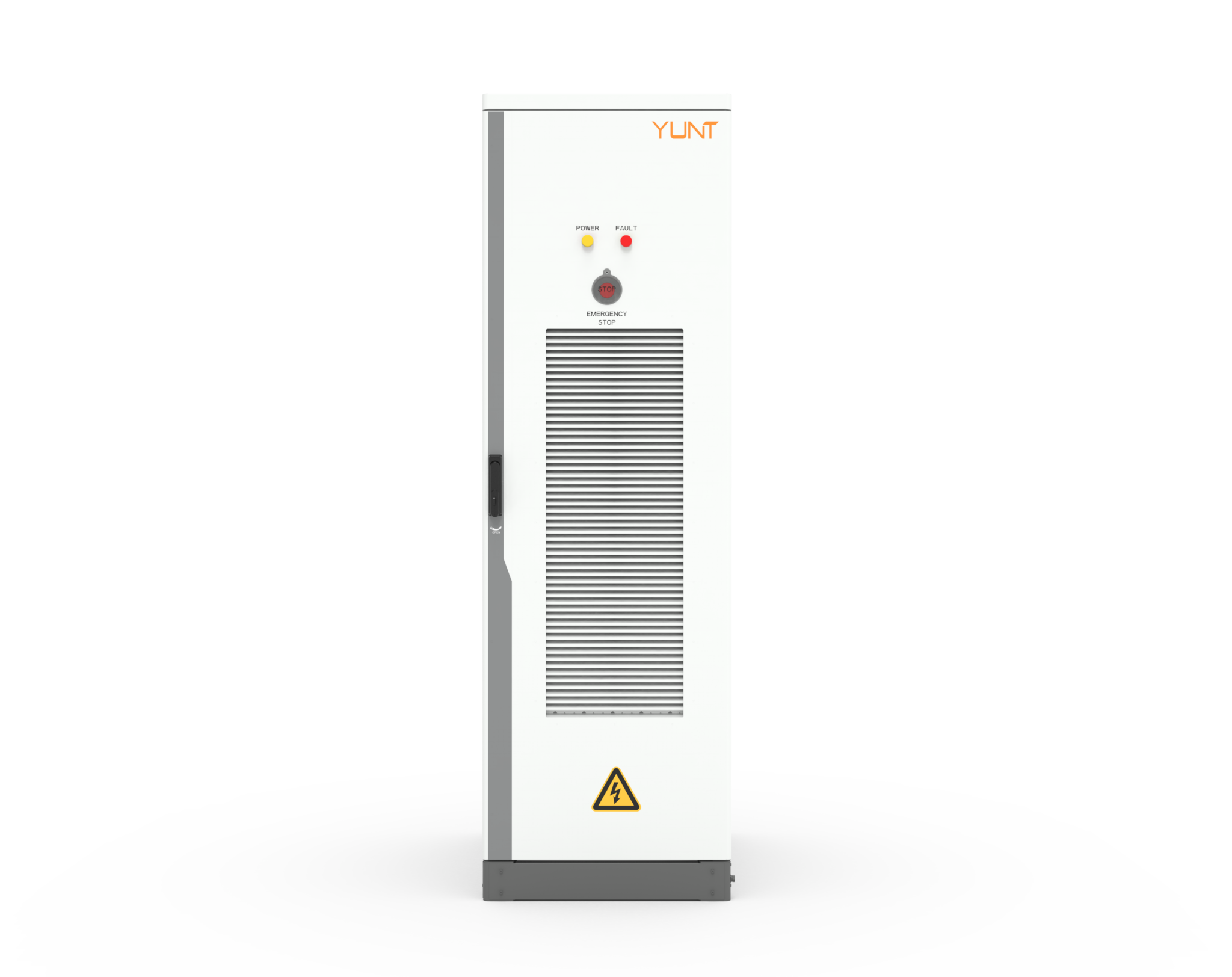
Selection guidance and common trade-offs
Utility-grade suppliers will raise initial cost but reduce operational risk where phase-angle jumps are likely, such as near protection zones or weak grids. Commercial-grade units fit stable commercial sites with stronger local distribution but demand tighter site studies. Balance cost and reliability against the likelihood of phase excursions and the cost of lost production. Consider modular implementations: specifying modular energy storage system designs helps standardize synchronization test procedures and simplifies field upgrades.
Advisory close — three golden rules
1) Require measured PLL re-lock time under explicit phase-step tests (report angle, slew rate, and 10-second capture window). This metric predicts operational stability.
2) Insist on grid-forming fallback or current-limiting strategies for any inverter that will operate on weak grids; demand documentation of transient injected currents.
3) Specify telemetry and fault logging for phase error and PLL state so root-cause analysis is possible after any event.
Choose vendors that document these metrics and support field retuning; that approach minimizes surprise and aligns procurement with operational realities. YUNT. –