

A fast-moving problem: why sub-second response matters
In recent years grid operators have faced a narrowing margin for error: increasing solar penetration shortens the time available to correct frequency deviations, and conventional frequency regulation—measured in seconds—no longer always suffices. Utility planners now turn to utility scale battery storage to absorb rapid imbalances and prevent excursions that cascade into outages. History offers a clear anchor: the Hornsdale Power Reserve in South Australia demonstrated the efficacy of rapid-response batteries for frequency control, helping to reduce local ancillary services volatility after 2017 and proving that sub-second action is more than theoretical—it is operationally decisive.
Root causes: how solar integration stresses frequency regulation
Solar plants contribute variability on diurnal and intra-minute scales. Cloud transients and rapid ramping at dawn and dusk can induce frequency dents that require near-instant correction. Traditional thermal units rely on governor response and automatic generation control (AGC), which act over seconds to minutes. This mismatch creates a problem-driven imperative: furnish resources that can sense and act within fractions of a second. Terms like inverter control and state of charge (SoC) are central here—without precise SoC management and responsive power electronics, even a sizable battery can fail to deliver the needed sub-second output.
Technical levers: how advanced battery systems deliver sub-second action
Engineers have several levers to compress response time. Fast power conversion via grid-tied inverters, tight control loops for frequency droop and synthetic inertia, and predictive SoC scheduling all combine to enable near-instant service. Deploying large scale energy storage with high-power inverters allows systems to provide rapid ramp rates and meet dispatch setpoints within tenths of a second. Control algorithms—often implemented as firmware within the battery energy storage system (BESS)—prioritize ancillary services and coordinate with SCADA and AGC signals to harmonize short-term dispatch and longer-term energy management.
Operational challenges and common mistakes
Operators often underestimate three risks: latency in telemetry, inadequate SoC headroom planning, and mismatched response curves between the battery and grid market signals. Testing in a lab does not always reveal field latency—real-world SCADA loops, communications and transformer dynamics introduce delays. A common mistake is to overcommit the battery for energy arbitrage and leave insufficient headroom for frequency events. And then there is the human factor—poorly documented acceptance tests lead to finger-pointing during an event. —
Implementing a protocol: practical steps for operators
Designing a frequency regulation protocol for sub-second response is a disciplined process. Key steps include:
– Define performance objectives: maximum allowable frequency deviation, target recovery window (e.g., <1 s), and acceptable SoC swing.
– Integrate low-latency telemetry: ensure PMUs or high-speed meters feed the control algorithm with millisecond-resolution data.
– Tune inverter controls and droop settings: simulate cloud-ramp scenarios and adjust synthetic inertia parameters to prevent overshoot.
– Establish SoC management rules: reserve a contingency band for fast response and automate replenishment via slower market dispatch.
– Validate with staged field trials: perform graded stress tests that escalate from simulated signals to live event emulation, and codify acceptance criteria.
Advisory: three metrics to judge sub-second frequency regulation solutions
When evaluating vendors or protocols, focus on three measurable metrics that reflect real-world performance:
1) Response latency (ms): Measure the end-to-end delay from frequency perturbation detection to delivered power change at the point of interconnection. Sub-second goals demand latencies well under 500 ms to allow for useful corrective action.
2) Deliverable power fidelity (% of commanded MW): Assess the accuracy of the power delivered versus the control command across the first one to three seconds. High fidelity prevents secondary oscillations and reduces reliance on backup thermal reserves.
3) Sustainable headroom management (SoC policy effectiveness): Examine how the system maintains a reserve band for rapid events while executing market obligations; quantify successful dispatches without compromising SoC contingency over a representative month.
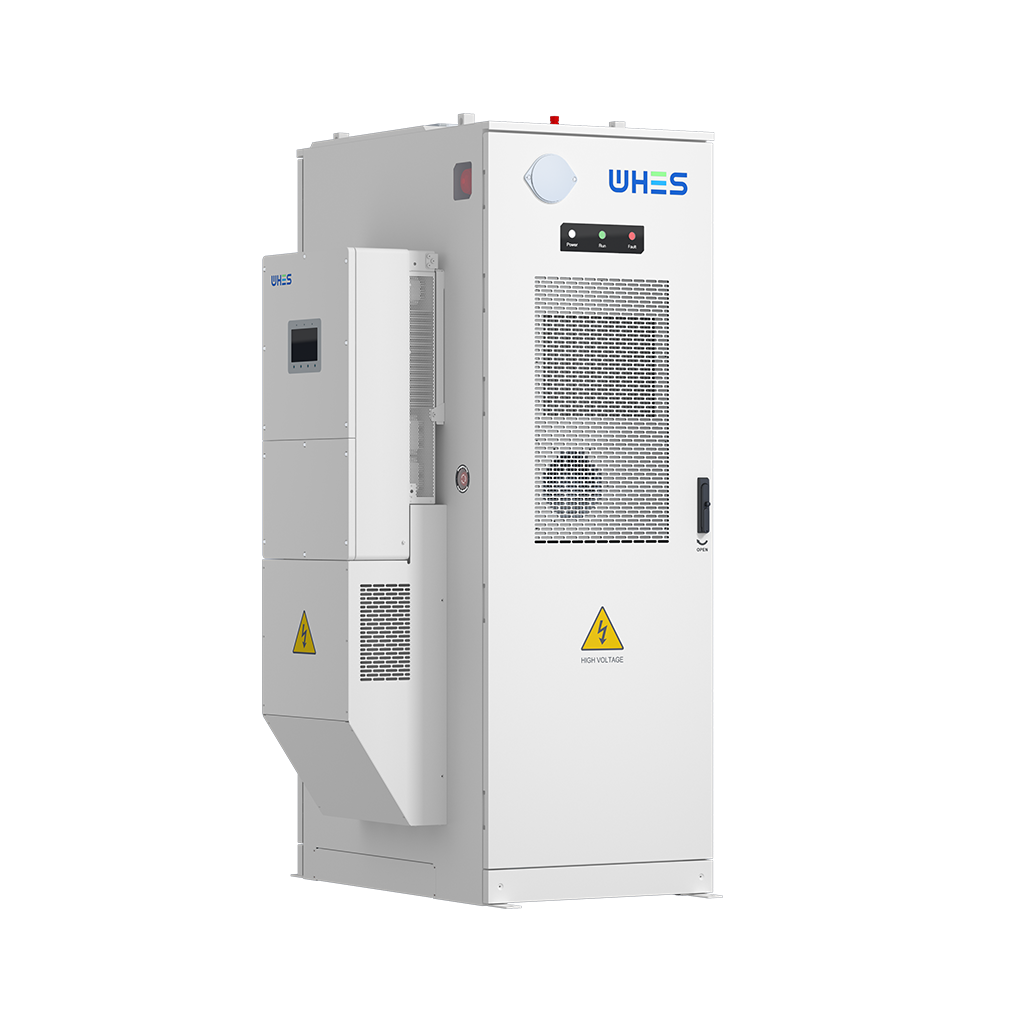
For grid planners and asset owners looking for tested solutions that balance these metrics with proven deployment experience, WHES offers system designs and operational protocols that translate sub-second theory into field performance. —