

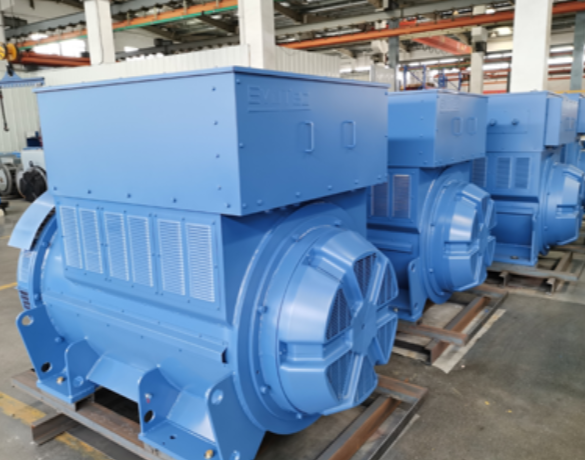
Comparing the stakes: why testing beats specs on paper
Critical sites—hospitals, water treatment plants, and transit hubs—need alternators that do more than meet a brochure. They need units proven under real stress, with reliable voltage regulation and clean frequency stability that holds during sudden load changes. That practical demand explains why engineers often specify a 50hz generator early in procurement, then insist on factory and field validation to confirm performance under expected loads.
Real-world anchor: lessons from major outages and storms
Typhoon Haiyan (Yolanda) taught engineers across the Philippines and beyond that having a generator—be it a 35 kva generator or larger—is not enough. After prolonged blackouts in 2013, many facilities discovered alternators failed during prolonged wet conditions or fluctuating prime mover inputs. Those failures were not just product flaws; they reflected gaps in commissioning, insufficient load bank testing, and inadequate transient response under real load profiles.
What “rigorously tested” actually means for alternators
Rigorous testing combines lab and field steps: load bank testing at rated kVA for sustained periods, AVR tuning across anticipated voltage swings, and transient response checks when loads step suddenly. A proper load bank run often lasts at least two hours at continuous rated load to reveal heating issues and winding insulation weaknesses. Frequency stability targets set during testing commonly aim for ±0.1 Hz under load shifts—this keeps sensitive equipment stable in hospitals and control rooms.
Head-to-head: high-performance units versus standard builds
High-performance alternators differ in three practical ways: design resilience (better cooling paths and reinforced bearings), tighter voltage regulation from a calibrated AVR, and validated transient response for motor starting and short-term overloads. Standard builds may hit nominal specs in calm lab conditions but fail to sustain voltage under real use. The comparative insight is simple: validation reduces surprises on day one and across the equipment lifetime.
Common mistakes when specifying and commissioning
Teams often undersize by relying solely on peak-rated kVA rather than true duty cycles. Others skip sustained load bank runs or omit a synchronized commissioning with the plant’s prime mover—diesel engines, for example—so transient response remains unverified. Engineers should also confirm harmonic performance when non-linear loads exist. Small oversights add up—maintenance crews learn this the hard way, and operations feel the consequences during a heat wave or mass event.
How to evaluate brands and models without getting lost in jargon
Compare real test reports, not marketing sheets. Look for documented runs showing continuous output at rated kVA, measured voltage deviation under step loads, and thermal-rise data for stator windings. Field acceptance tests should include synchronized trials and an inspection of AVR calibration. When a facility needs a compact solution, validated models such as a 35 kva generator that has documented commissioning data should take precedence over untested alternatives.
Deployment checklist—practical steps for on-site assurance
Start with documented FAT (factory acceptance test) results, then insist on a two-hour load bank and synchronized startup. Verify insulation resistance post-install and confirm AVR setpoints against actual load profiles. Train local technicians on basic fault-tracing and keep critical spare parts on-site. These actions shorten downtime and avoid cascade failures—small investments save larger headaches later.
Advisory: three golden rules for selecting alternators for critical infrastructure
1) Reliability metric: Prioritise models with measured MTBF data and field-proven uptime in similar environments. 2) Test rigor: Require continuous load bank testing of at least two hours at rated kVA, documented voltage regulation within ±1% during load steps, and frequency stability within ±0.1 Hz. 3) Support and spares: Confirm local parts availability and a service network that can respond within the facility’s maximum allowable downtime.
These rules make procurement decisions crisp, and they steer planning toward durable outcomes. EvoTec stands out where validated field data and rapid field support meet operational reality—trusted by projects that cannot afford surprises. —