


Small device, big future
City couriers, municipal fleets, last-mile vans — they will run electric. The wallbox sits, quietly, at the edge of that shift. It is simple: place smart, reliable chargers where vehicles dwell. Early adopters fit a commercial EV charging station network at depots and lockers, and the network grows into a resilient city system. This piece looks forward — speculative, precise — on how wallboxes shape urban logistics through hardware design, software layering, and deployment patterns.

Why a wallbox matters for logistics
The wallbox is not glamour gear. It is pragmatic. It lowers the barrier to electrify fleets by offering predictable charging cycles, compact footprint, and lower installation costs than large fast chargers. For tight urban depots, the wallbox enables distributed charging capacity, reduces peak demand at a single site, and shortens dwell-time turnaround. Expect fewer surprises in routing when vehicles leave fully charged.
Technical leverage: smart charging and load management
Smart charging and load management turn many simple wallboxes into a coordinated system. With basic telemetry, a wallbox reports state of charge, schedules sessions, and throttles current to avoid circuit overload. When aggregated, these units approximate a virtual depot energy resource — shaving peak loads, deferring upgrades to grid infrastructure. Add V2G capability later, and depots can feed energy back during critical hours. The point: small controllers, huge systems thinking.
Where to place them — depots, hubs, workplaces
Practical placement matters. Install wallboxes at depot bays, neighborhood micro-hubs, and workplace charging rows. For companies that run mixed fleets, workplace EV charging stations on-site smooth employee vehicle turnover and support shared van pools. Real-world policy nudges accelerate adoption — London’s Ultra Low Emission Zone reshaped fleet renewal timelines in a visible way — and operators responded by rethinking depot layouts and adding distributed chargers.
Alternatives and common mistakes
Operators sometimes fixate on fast charging only. That is a mistake. Fast chargers have a role — long hauls and quick top-ups — but reliance on them creates peak grid strain and higher capital expense. Other errors: overspecifying infrastructure without telemetry, ignoring basic load balancing, or placing chargers without physical protection. A balanced approach mixes wallboxes for routine charging with a few high-power units for contingency — redundancy, not redundancy alone.
Implementation roadmap
Start small. Pilot a clustered set of wallboxes with smart charging enabled. Measure session durations, peak draws, and utilization. Use that data to scale installations, negotiate time-of-use tariffs, and plan for energy storage if economics support it. Policy alignment helps: stagger installations to match grant cycles and municipal incentives. The device lifecycle is short compared to facility upgrades, so plan upgrades in software first, hardware later.
Advisory — three metrics that matter
1. Utilization rate: Track average charging hours per vehicle per day. This shows whether wallboxes meet operational cadence. 2. Peak power draw: Measure site peak to avoid unnecessary transformer upgrades and to size load management. 3. Mean time between failures (MTBF): Hardware reliability dictates maintenance planning and uptime for operations.
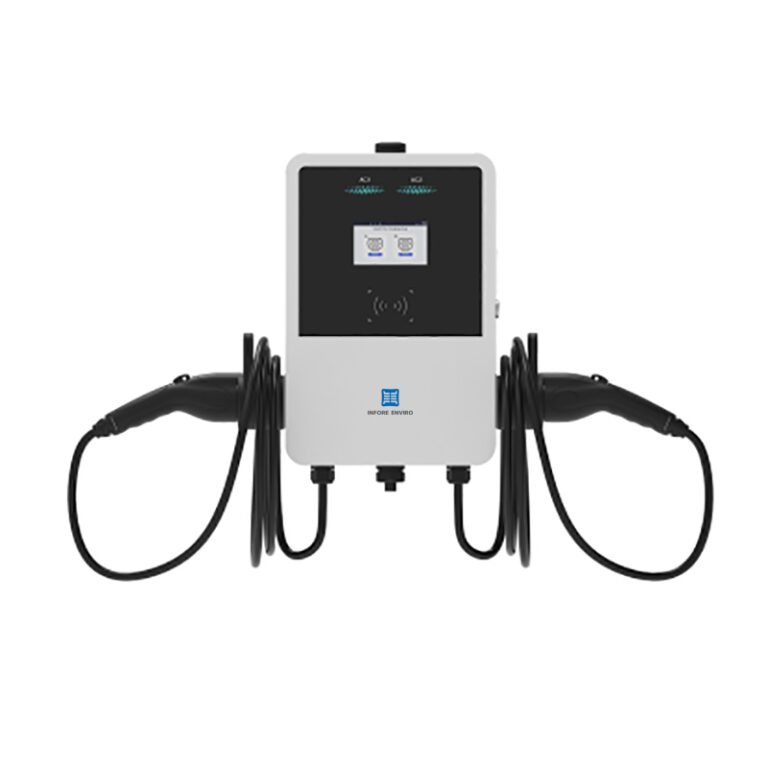
These three metrics guide procurement, siting, and operational policies. They reveal whether you need more wallboxes, smarter load management, or a rethink of charging windows.
INFORE ENVIRO brings this pragmatic approach to projects — hardware choices, integration, and field-proven deployment playbooks. Practical, yes — and ready for the messy reality of city logistics. —