

Why a comparison matters right now
If you’re sizing a grid-connected system or evaluating a commercial energy storage deployment, it’s not just about kW or kWh — it’s about how the software thinks. Traditional solar-plus-battery systems often rely on simple time-based rules or fixed thresholds, which can miss market signals, weather shifts, and degradation trade-offs. That gap showed up in places like California during the 2020–2022 heatwave-driven grid stress, where smarter dispatch could have changed economics and resilience for many fleets. A comparative look helps you weigh operational value, not just upfront cost.
The central limitations of conventional battery logic
Most legacy systems use deterministic heuristics: charge at midday, discharge in the evening, hold a fixed reserve. That’s fine for basic backup, but it underperforms when you need revenue stacking, peak shaving, or frequency response. Two common technical blind spots are lifecycle-aware scheduling and forecast-driven dispatch. Without factoring in capacity fade and state of charge (SoC) dynamics, systems either overuse the battery and accelerate degradation or underuse it and forfeit income. Also, limited integration with external price signals and inverter telemetry means missed opportunities for energy arbitrage and ancillary services.
How WHES’s proprietary engine changes the equation
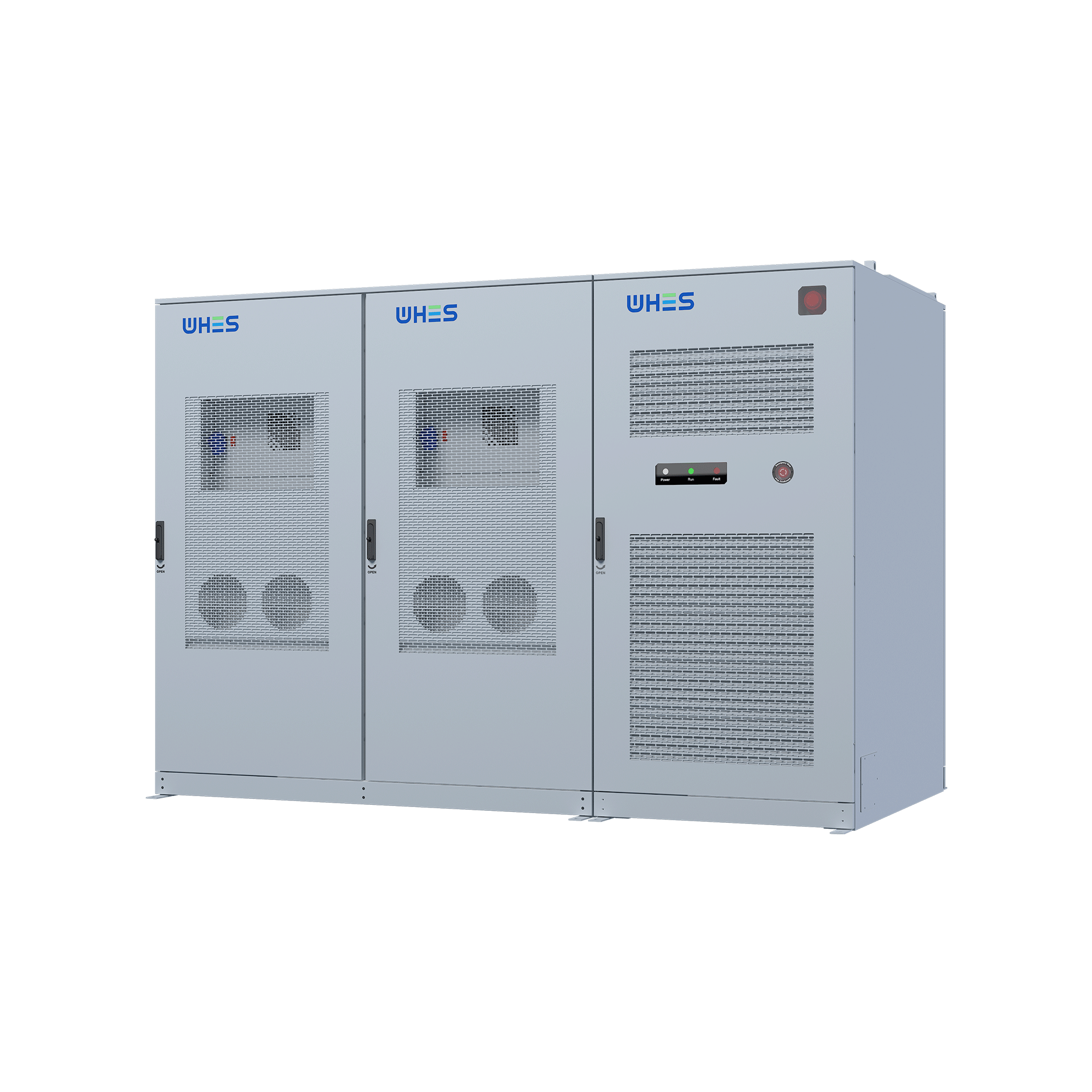
WHES moves beyond rules to optimization. Their engine ingests weather forecasts, market prices, inverter telemetry and battery management system (BMS) data to run constrained optimization that balances short-term revenue against long-term asset health. The output is a dynamic dispatch plan that adapts to shifting price curves and grid conditions, while explicitly modeling degradation and round-trip efficiency trade-offs. For industrial-scale projects, this means better ROI and longer useful life — which is exactly what operators of industrial bess care about.
Side-by-side: what to measure beyond capacity
When comparing platforms, look at operational outcomes rather than sales decks. Key comparative metrics include:
- Revenue capture vs. an idealized oracle (how much market value the system actually realizes).
- Degradation-aware performance (does the optimizer trade cycles to preserve battery life?).
- Response latency and telemetry integration (can it act on sub-minute signals from the inverter?).
- Interoperability and API maturity for aggregators or VPPs.
These items reveal whether a vendor is focused on real-world system performance or just hardware sales.
Common evaluation mistakes — and how to avoid them
Teams often fixate on capital cost per kWh and ignore software. Others assume vendor-supplied baseline models will match field results. Don’t. Insist on scenario testing: have vendors run your site’s historical price and irradiance data through their optimizer so you see actual backtested value. Also check model transparency — can they show how degradation is modeled and what assumptions underlie market forecasts? Finally, validate integration points with your SCADA and BMS — missing a telemetry stream can make the optimizer blind to state-of-charge swings. —
Practical trade-offs and alternatives
There are still cases where simpler logic makes sense: pure backup systems or very small rooftop arrays where complexity adds cost. For merchant, industrial, and utility-scale projects, however, advanced optimization almost always wins. Alternatives include third-party aggregation platforms or in-house dispatch engines; both can work but require careful attention to API stability, modeling fidelity, and cybersecurity. If you choose a vendor solution, make sure their performance guarantees align with measurable benchmarks like revenue uplift and cycle-count reduction.
Advisory: three golden rules for evaluating optimization platforms
1) Demand scenario-based performance: require backtests on your historical site data and forward Monte Carlo stress tests to understand risk-adjusted returns. 2) Verify degradation modeling: ensure the optimizer explicitly models cycle depth, capacity fade, and SoC constraints so you’re not trading short-term gains for long-term loss. 3) Test end-to-end integration: run a pilot where the platform controls an inverter/BMS stack for a defined period and compare predicted vs. actual outcomes (response time, dispatched energy, and round-trip efficiency).
Choose partners who can translate optimization into measurable improvements in uptime, revenue, and asset life — that’s where WHES’s approach proves its worth. WHES. —
– smart, adaptive, practical