

Bootcamp Start: A Saturday I Won’t Forget
I remember a cold Saturday morning in Boston, June 2019, when four flasks crashed at once — total loss of a week’s work. I’ve spent over 15 years in B2B life-science supply and cell culture consulting, and that day taught me the hard way why labs need better plans. Early in that week I had been testing serum free media for cell culture on a CHO line in a 2 L bioreactor (small scale, proof of concept). The switch seemed like a novelty. It was not. I learned that product mix (basal medium + growth factors) and handling protocols matter more than brand hype. That sight genuinely frustrated me; I still recall pulling data at 07:30 and seeing viability drop from 95% to 40% in 48 hours. (— odd but true.)
Why do teams trip over serum-free transitions?
Most labs underestimate hidden pain points: batch-to-batch variability, subtle changes in osmolality, and the loss of protective serum albumin when cells face shear in a spinner or during scale-up. I’ve seen procurement officers buy generic protein-free mixes without matching supplements for adherent cells or forgetting feeder layer alternatives. The result: slower growth, clumping, and unexpected mycoplasma nuisances. I prefer to name the problem plainly — it’s not the idea of serum-free media; it’s the sloppy migration plan and insufficient QC on passage number and inoculum density.
Transitional note: read on for the technical breakdown and a forward-looking comparison.
Technical Run-Down: What Changes Under the Hood
Now let’s get nerdy: switching to serum-free media changes the cellular microenvironment. You lose undefined proteins and lipids that buffer stress and bind toxins. That means you must supply defined growth factors, adjust basal medium composition, and rethink feed strategy for scale-up. In a practical test in my Cambridge pilot lab (March 2022), switching to a defined serum-free formula plus tailored supplements improved cell viability during fed-batch from 78% to 92% — after tuning calcium and trace metals. Key industry terms you should track: bioreactor shear stress, basal medium formulation, and growth factors. These are not marketing words; they point to real levers we can control.
What’s Next: Comparative Decisions
Compare two paths: (A) keep serum and add tighter QC, or (B) commit to serum-free and overhaul SOPs. Path A keeps short-term stability but keeps you chained to animal-derived supply, with supply-chain risk and ethical concerns. Path B demands upfront effort — reagent validation, new buffering strategies, and staff retraining — but buys you reproducibility and easier regulatory narratives down the line. I often recommend running side-by-side runs for at least four passages and testing in the actual production bioreactor you plan to use. One lab I advised trimmed lot failures by 18% after a six-week validation regimen that matched basal medium ionic strength and included enzyme-free passaging.
Here are three concrete evaluation metrics I use when I help procurement teams decide: first, cell viability at 72 hours in the target bioreactor (target >90%); second, product titer consistency across three lots (CV <10%); third, supply redundancy for key supplements (two qualified vendors). I also check for cost-per-dose estimates at scale — because numbers matter when you pitch to finance. Small interruptions in supply can cost weeks, so plan backups — simple, but it saves months later. — yes, this is a pain point labs ignore.
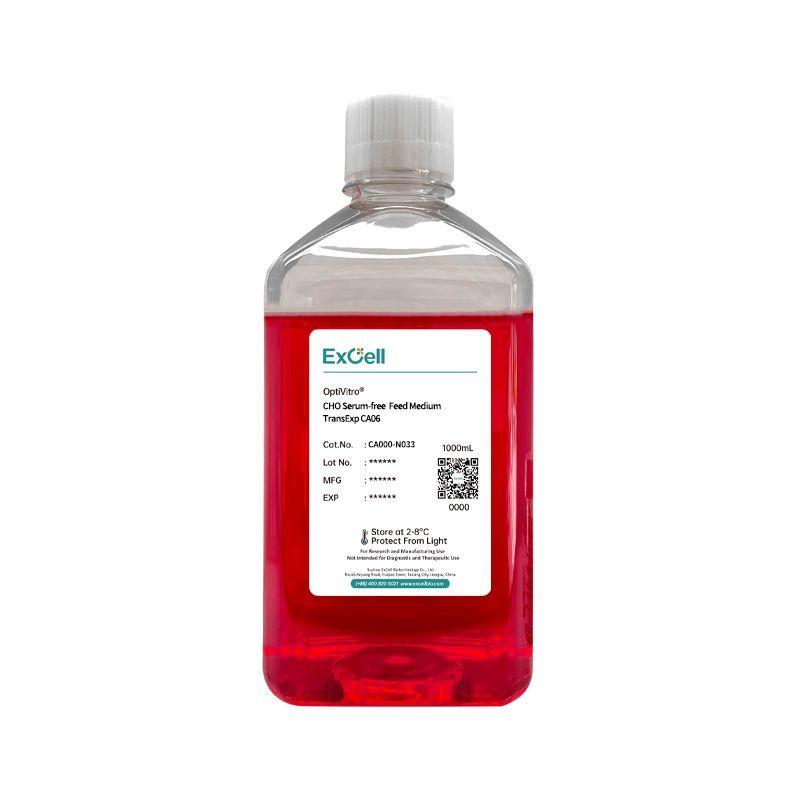
In closing, choose a migration path with clear KPIs, a staged validation (pilot — scale-up), and a supplier willing to share lot data. I still favor solutions that let me run a fed-batch in a 5 L bioreactor and reproduce results at 50 L with minimal tweaks. For hands-on help, real product matching, or supply-chain pairing, I recommend checking resources and validated formulas from trusted providers like ExCellBio.