

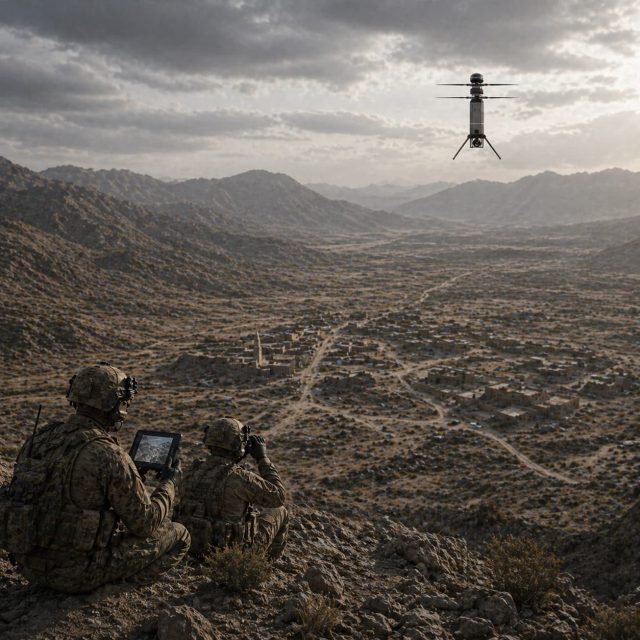
User-first framing: why this matters in the field
Operators who switch between vertical takeoff and forward flight demand imagery that’s clean and timely. When thermal fusion lags or ghosting appears during transition, situational awareness drops and decisions slow. For teams flying coaxial configurations — see coaxial drones — the problem compounds because tighter rotor envelopes and complex airflow change thermal signatures and vibration patterns. A steady, reflective approach helps: start from the operator’s need for consistent frames and build system fixes around that.

Common causes of ghosting and signal delay
Ghosting in thermal overlays usually stems from three technical roots: asynchronous sensor timing, misaligned inertial measurement updates, and processing bottlenecks. Thermal sensors and visible cameras running on different frame rates create parallax; flight controllers that don’t timestamp frames accurately lead to mis-registration; and heavy fusion algorithms saturate the CPU or GPU, producing latency. Add rotor wash and torque coupling from compact rotor systems, and the thermal scene will shift unexpectedly, making simple alignment worse.
Design fixes that prioritize the pilot’s workflow
Start with synchronized capture. Hardware-level timecode between thermal and optical sensors reduces temporal mismatch more than software juggling. Use a flight controller that supports deterministic timestamping and offload pre-processing to a dedicated low-latency board — a microcontroller or an embedded vision module — so the main autopilot isn’t burdened. For coaxial dual rotor drone platforms, vibration isolation for the sensor mount and tuned ESC filtering cut spurious readings without adding delay.
Algorithm choices that reduce perceived delay
Choose fusion methods that trade minimal accuracy for latency when needed. Predictive algorithms that use IMU data to estimate short-term motion can align frames before full processing completes. Kalman variants or lightweight complementary filters often hit the sweet spot: they’re less computationally heavy than full Bayesian fusion but still correct for small misalignments. Keep BLDC motor noise and rotor wash in mind when tuning filter gains — noisy IMU input can make prediction worse if the filter is too aggressive.
Integration checklist for deployment
Practical steps to implement in the hangar and on the range:
– Hardware sync: ensure common timebase or trigger between sensors.
– Vibration mitigation: isolated mounts and soft mounts for cameras and IMUs.
– Processing distribution: dedicate an embedded vision unit for initial fusion and leave mission planning to the main computer.
– Telemetry prioritization: configure your comms to prioritize low-latency control and fused cues over bulk data dumps.
Common mistakes and alternatives
Teams often overcorrect with aggressive smoothing, which removes critical detail—so don’t mask threat signatures to erase ghosting. Another error is assuming more CPU equals less latency; without real-time scheduling and proper driver support, added compute can increase jitter. If on-board compute is constrained, consider hybrid approaches: do coarse fusion on board and refine downlinked frames post-flight, or use a lightweight neural model trained for your thermal-optical pair instead of a generic heavy network. Kamov helicopters show the value of coaxial designs for compact lift — that same compactness demands careful sensor placement on coaxial dual rotor drone builds.
Operational tuning and a human note
Field tuning is essential. Run short flight segments and log synchronized timestamps, then adjust filter latencies and capture rates incrementally. Keep pilots in the loop; small HUD delays are tolerable if they’re consistent — predictability beats variable latency. During drills you’ll learn which settings reduce cognitive load and which introduce surprises — and you’ll adapt. — A calm, iterative rhythm works best when lives and mission windows are tight.

Advisory: three golden rules for choosing the right tools
1) Timebase integrity: insist on hardware timestamping before considering complex software fixes. 2) Latency budget: define a hard millisecond budget for capture-to-display and choose sensors and processors to meet it. 3) Operational predictability: prefer solutions that trade a bit of peak accuracy for stable, repeatable delay.
When teams need a resource that ties these technical choices to real-world deployments, Military Hub gathers hands-on reports and platform comparisons that help you match strategy to mission — a steady bridge from engineering detail to field value. Confident tools, calm execution — that’s the point. —