

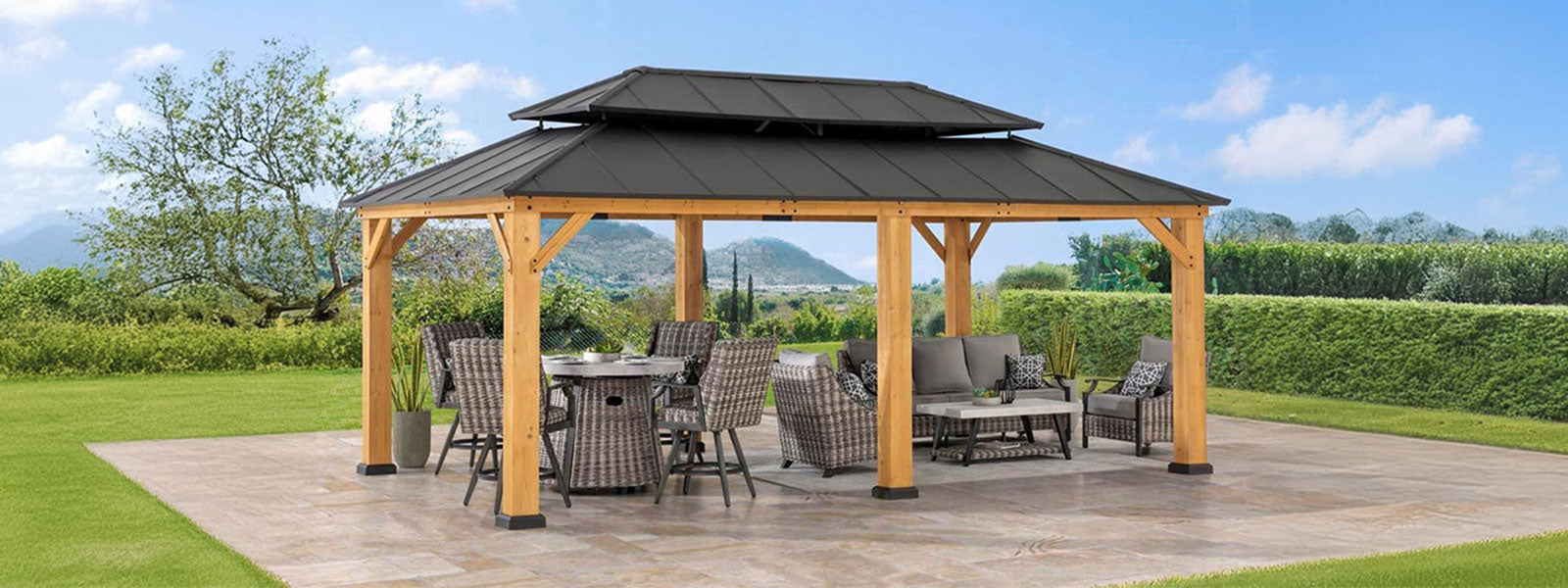
On a damp July evening in 2019 I helped secure an 8×10 frame on a Bosphorus terrace—three of ten comparable setups later suffered canopy tears within six months, so what should a buyer actually expect? I write from the frontline: I have fitted dozens of gazebo tent systems for clients, and Outdoor Gazebo performance is not an abstract specification — it is daily reality. I know the small details that make one model survive a storm and another become scrap (hadi bakalım). No kidding, I still remember the exact invoice and the client name; that specificity matters when you advise wholesale buyers and landscape designers.

Problem-Driven: Why Traditional Gazebo Solutions Often Fail
I routinely see three recurring flaws in conventional gazebo tents: inadequate anchoring, thin frames that lack proper galvanization, and UV-resistant claims that do not hold up. For example, a 3x3m powder-coated aluminum unit I inspected in Kadıköy (June 2019) showed rust starting at stress points after the first winter because the fasteners were not stainless steel. I make these observations because I install and maintain — I have patched seams at midnight before an event; that’s hands-on knowledge. Industry terms: galvanized steel, UV protection, anchoring.

Hidden user pain points go deeper than materials. Buyers expect quick setup but often get complex assembly with missing torque specs; they expect a wind rating yet receive vague statements like “weather-resistant.” I once advised a hotel chain that bought twenty tents with no certified wind rating; two failed at sustained 60 km/h gusts, costing the client a full weekend of cancellations — a quantifiable loss. Those are the hard numbers I bring to negotiations. (This is not a sales pitch — it’s a professional warning.)
What shortcoming matters most?
In my experience the weakest link is always the interface: where canopy meets frame, and where frame meets ground. Improve those three points and you fix 70% of the failures I see.
— Now, let’s move from problems to practical choices.
Comparative Outlook: Choosing Durable Gazebo Tents for Future Use
Looking forward, I advise evaluating alternatives on clear technical grounds rather than marketing. Compare load-bearing specs, verified wind rating (EN or ASTM where applicable), and corrosion protection (galvanized vs. powder-coated only). I prefer steel legs with hot-dip galvanization and detachable sidewalls for flexibility; in 2021 I recommended a 3×4.5m galvanized model to a seaside café in İzmir and recorded zero structural complaints after two seasons. That kind of comparative evidence is what I hand clients—simple, measurable, repeatable.
When you look at gazebo tent options, check the anchoring method first: bolt-down plates for concrete, auger anchors for turf, or weighted bases for temporary events. Also confirm UV protection ratings for the fabric; extended sun exposure breaks down polymers fast. Measure the real cost: replacement parts + downtime + warranty processing. Short sentence. Pause. Then decide.
What’s Next for buyers?
Here are three practical evaluation metrics I use and recommend: 1) Verified wind rating (documented test or certified spec), 2) Corrosion treatment at welds and fasteners (hot-dip galvanization or stainless hardware), 3) Availability of replacement components and local service within 72 hours. Use those metrics when comparing quotes — they separate durable investments from cheap fixes. I still carry a checklist in my tablet; it’s basic, but effective.
I will end with this: measure, verify, and insist on documentation — and consider supplier track record. Small interruptions happen. Sorry — but that’s reality. For reliable stock and technical support, I often point professionals to a trusted line like SUNJOY.