

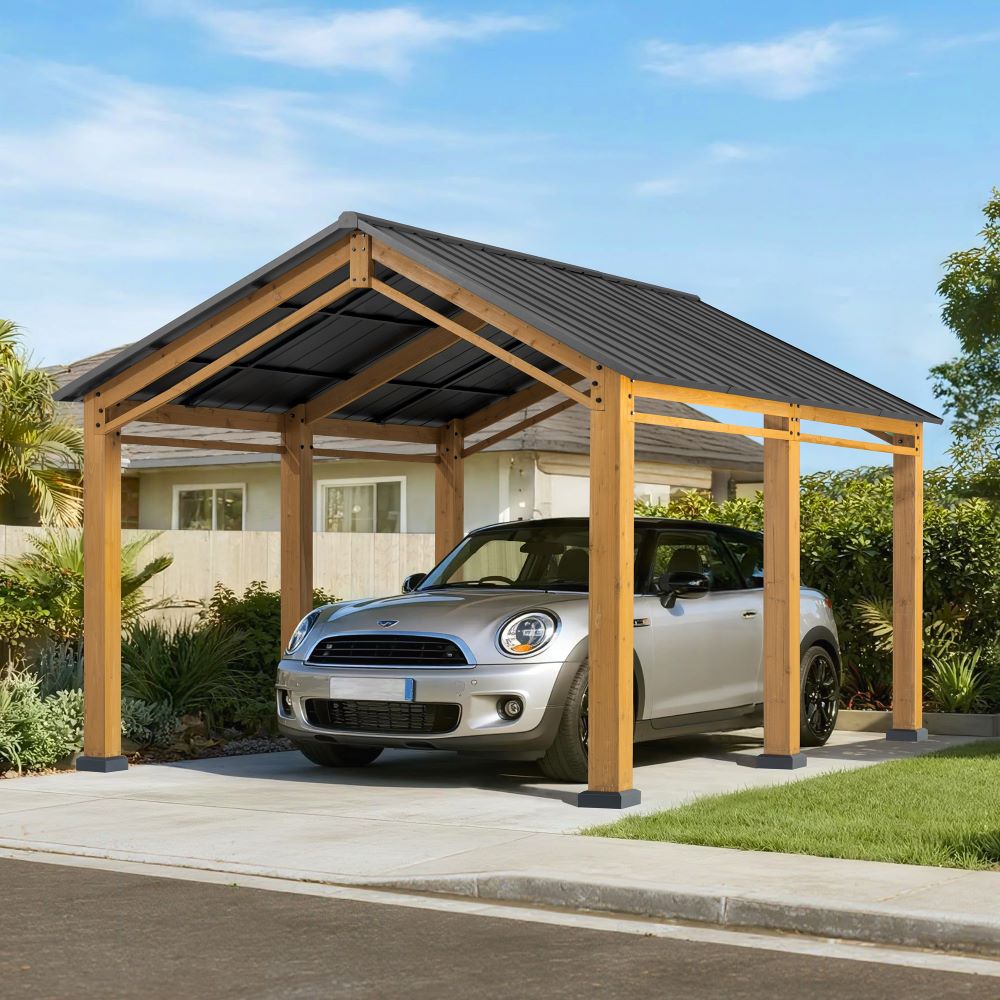
How to keep a Sunjoy Carports decision practical: the available installation footprint for seasonal equipment storage
When planning a backyard update, SUNJOY carports should be considered against the space you can actually dedicate to the project. A seasonal shelter may need to accommodate equipment, a vehicle, or another outdoor use, but the right choice begins with the installation footprint. Measure the area you want to use, note nearby structures and access routes, and decide what must remain usable around the shelter. This turns a broad product search into a practical space-planning exercise.

Start with the job the space must perform
Seasonal equipment storage is not the same requirement as covered vehicle parking. Equipment may need a place that is easy to reach during part of the year and less prominent during the rest. A vehicle or RV can impose a different planning priority, while a backyard update may focus on creating a covered outdoor area. The collection page discusses carports for vehicles, RVs, or equipment, as well as possible use as an outdoor workspace, shaded patio, or storage area. Use that range as a starting point, not as proof that every model suits every purpose.
Write down the primary use before comparing listings. If storage is the priority, identify the equipment that must fit and the side from which you expect to reach it. If the space may serve more than one purpose, rank those uses. For example, seasonal equipment might share the area with a vehicle or with a workspace at different times. A ranked list helps you avoid choosing a shelter based only on its category name.
Separate listed details from planning assumptions
Product pages can help you identify the type of construction being offered, but collection-level information does not answer every footprint question. The page describes steel frames and weather-resistant roofing as features of metal carports. Those details can help you compare the listed construction approach, yet they do not establish the dimensions, clearances, anchoring needs, or suitability of a particular model for your yard. Treat those as model-specific planning questions rather than assumptions.
The same discipline applies when comparing metal carport kits. A kit may appear convenient because the collection describes pre-cut parts, hardware, and step-by-step instructions. That is useful information about the stated kit contents. It does not, by itself, tell you how the selected model will fit your site or how much working room you need during installation. Keep the product evidence and the site plan in separate columns when you evaluate an option.
Use the footprint to compare trade-offs
A larger available area may support more flexible use, but available space is only one part of the decision. You also need to consider how the shelter will relate to the rest of the yard. A footprint placed too close to a fence, planting bed, building, or frequently used path can make a theoretically suitable option less practical. Conversely, placing it where equipment is difficult to reach may reduce the value of the covered space.
Compare each candidate against the same questions. What is the primary use? What must be accessible without moving other items? Which parts of the yard should remain open? Does the intended placement support the way you expect to use the space across the season? These questions do not require you to assume performance or compatibility. They simply connect the product choice to the layout you already have.
Material labels can also influence how you organize your comparison, without replacing a site review. A steel frame and weather-resistant roofing are page-listed features of the collection, so record them as stated characteristics. Do not turn those labels into a guarantee about local conditions or long-term results. Keep the comparison factual, then assess the installation location and intended use separately.
Build a model-specific review before choosing
Once you have narrowed the use case and approximate placement, return to the selected product page. Confirm the exact components included with that model and read the installation information provided there. The collection describes kits as including pre-cut parts, hardware, and step-by-step instructions, but the assigned product page remains the right place to confirm what applies to your choice. This step can prevent a broad collection description from being treated as a complete project specification.
- Define whether the space is for a vehicle, RV, equipment, workspace, shaded patio, or storage area.
- Record the selected listing’s stated construction details, including steel frames and weather-resistant roofing where listed.
- Confirm the selected model’s kit contents, including pre-cut parts, hardware, and step-by-step instructions where stated.
Record the details that affect your decision in a short comparison note: intended use, available installation area, page-listed construction details, stated kit contents, and any model-specific instructions. If one option is intended mainly for equipment and another is considered for vehicles or an outdoor workspace, compare them against the same site constraints. A simple record makes it easier to see whether a product fits the project rather than merely matching the search term.
Make the next step practical
The best decision is the one that connects a clearly defined use with a measured installation area and the details actually stated for the selected model. Use the collection page to understand the available use cases, construction descriptions, and kit format, then narrow the choice through the product-specific information. Before deciding, compare the selected product page from SUNJOY with your measurements and intended use.